
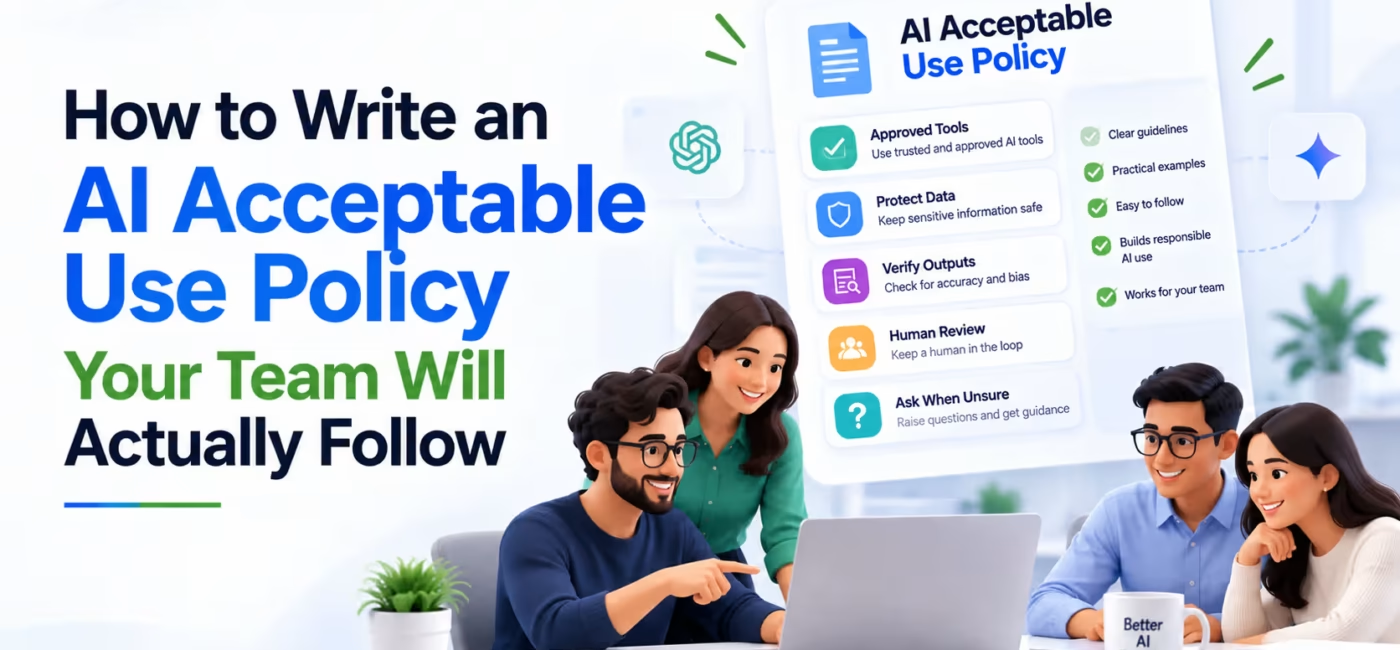
AI tools have moved into daily work faster than most company policies. Employees use chat assistants to draft emails, summarize documents, analyze spreadsheets, and write code, often on their own initiative and often with personal accounts. Most of this is well intentioned, and much of it saves real time.
The risk is not that people are using AI. It is that nobody has told them where the lines are. A short, practical acceptable use policy gives employees clear guidance, protects company and client data, and lets the business adopt AI with confidence instead of fear.
Why Informal AI Use Creates Risk
When there is no policy, each person makes their own decisions about what to paste into an AI tool. Someone may upload a client contract to get a quick summary. Another may paste customer records into a free tool to clean up a list. Neither intends harm, but both may have sent sensitive information to a service the company has never reviewed.
Consumer versions of AI tools can retain submitted content or use it to improve their models, depending on the settings and terms. Once data has left the company, it is difficult to retrieve or control, and in regulated industries it can create a reportable incident.
Start by Sorting Your Data Into Simple Categories
The most useful part of any AI policy is a plain explanation of what can and cannot be shared. Three categories are usually enough. Public or low-risk information, such as published marketing material, can generally be used freely. Internal business information, such as draft plans or non-sensitive documents, may be allowed only in approved tools. Restricted information, such as customer records, health or financial data, credentials, and anything covered by a contract or regulation, should not go into AI tools unless a specific approved arrangement exists.
Giving real examples from the business makes the categories stick. Employees apply a rule more reliably when they can see themselves in the example.
Maintain a Short List of Approved Tools
A blanket ban rarely works, because people simply use tools out of sight. A better approach is to maintain a list of approved AI tools, review each one before adding it, and make it easy to request a new tool.
An approved list also lets the business choose versions designed for organizations, with features such as company-managed accounts, administrative controls, and commitments about how submitted data is handled. These controls are typically stronger than those on free consumer accounts, which is a good reason to steer employees toward them.
Set Rules for Accounts and Settings
Policy should specify that work-related AI use happens through company-managed accounts, not personal ones. This keeps access under the business’s control, allows accounts to be removed when someone leaves, and makes activity easier to review.
It should also cover the settings that matter, such as whether conversation history is retained and whether submitted content can be used for training. Multi-factor authentication should protect these accounts like any other business system.
Require Human Review of AI Output
AI tools can produce confident answers that are wrong, incomplete, or invented. A policy should state clearly that people remain responsible for anything they send, publish, or act on, and that AI output must be checked before it is used, especially for legal, financial, medical, or customer-facing material.
This also addresses intellectual property and quality concerns. Employees should understand that AI-generated content may need verification and that the business expects the same standard of accuracy it would from any other work product.
Check Providers Before Trusting Them With Data
Before approving a tool, a few questions go a long way. Where is data stored and who can access it? Is submitted content used for model training? How long is it retained? What security assurances does the provider offer, and how quickly would the business be told of an incident?
For tools that connect to company systems such as email, files, or customer records, the review should be more thorough, since broader access means broader potential impact. Keeping notes on each review makes future decisions faster.
Train People, Provide Examples, and Make Reporting Easy
A policy that lives only in a shared folder will not change behavior. A short walkthrough, with examples of acceptable and unacceptable requests, helps employees apply the rules in real situations. Reminders when new tools are approved keep the guidance fresh.
Just as important, employees should know how to ask questions and report mistakes without fear. Someone who pasted something they should not have is far more helpful to the business when they say so quickly. A fast report lets the company respond while the issue is still small.
Review the Policy Regularly
AI tools and their terms change quickly, so a policy written once will go stale. A review every few months, or when a significant new tool or regulation appears, keeps the rules realistic. Short and current beats long and outdated every time.
How Mindcore Technologies Helps Businesses Adopt AI Safely
Mindcore Technologies has spent more than 30 years helping businesses adopt new technology without creating avoidable risk. Under the leadership of Matt Rosenthal, CEO of Mindcore Technologies, the company delivers IT services in El Paso that include cybersecurity, compliance support, and IT consulting, along with AI readiness and risk assessments that help organizations set practical rules for how AI is used.
Businesses working with Mindcore get an acceptable use policy tied to their actual data, systems, and regulatory obligations, supported by the access controls and monitoring that make the policy enforceable.
Conclusion
AI is already part of how most teams work, which makes an acceptable use policy a practical necessity rather than a formality. Sorting data into clear categories, approving tools deliberately, using company-managed accounts, requiring human review, vetting providers, and training people in plain language give a business control without slowing it down. Companies that put these basics in place early are better positioned to take advantage of AI while keeping client and company information protected.
About the Author
Matt Rosenthal is the CEO and President of Mindcore Technologies, a full-service IT consulting and cybersecurity firm serving businesses across Florida, New Jersey, Maryland, South Carolina, Louisiana, Texas, and nationwide.
With more than 30 years of experience in IT leadership, managed services, and technology strategy, Matt has helped organizations across healthcare, financial services, and professional services adopt new technology, including AI, with clear governance and security controls. He holds an MBA in Technology Management, is a certified Project Management Professional (PMP), and is the host of Digging In, a weekly podcast on success in business, life, and health.
Related Articles To Read:
How to Evaluate AI Tool Security: SOC 2, HIPAA & Data Privacy Audit?
Managed K8s for Enterprise Applications: What CIOs and IT Heads Must Know
What is AI governance?
