
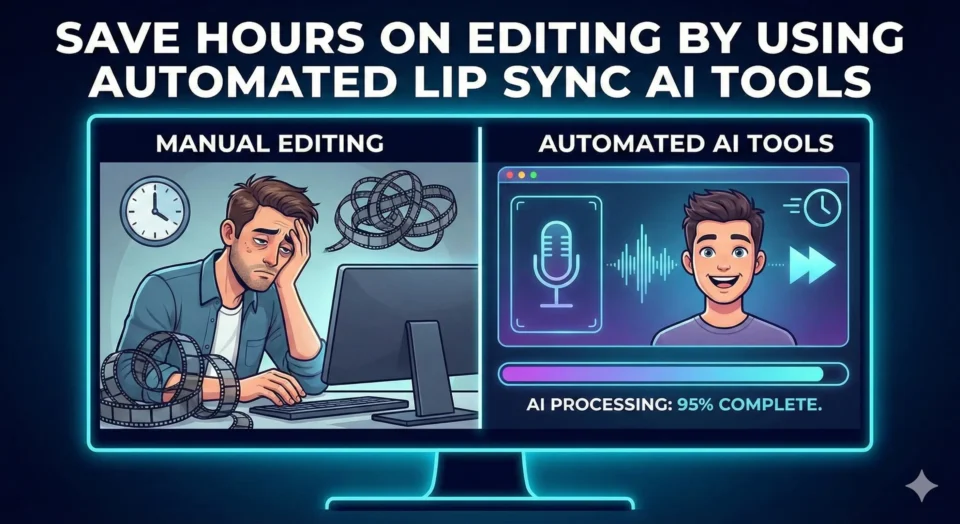
The growing complexity of modern video editing procedures is inclined to retard the production. Some of the camera angles, overlapped audio, motion graphics, and captions are to be attended to by the editors. These can be rather overwhelming requirements, especially when it comes to creating material that must have a certain time lag between text and images. The matching of lips with audio has been one of the most tedious of all editing jobs. Frame-by-frame and manual adjustments are needed, with close supervision and manual re-adjustment, which consumes hours of creative work.
Today, lip sync AI technology is transforming this process, enabling creators, marketers, and educators to produce polished videos efficiently without sacrificing quality. Pippit and other social networks now perform all the repetitive editing work, and you can focus on telling stories and visual direction, instead of using time to make fine-tuning adjustments.
Why Manual Lip Sync Editing Slows Down Creative Workflows?
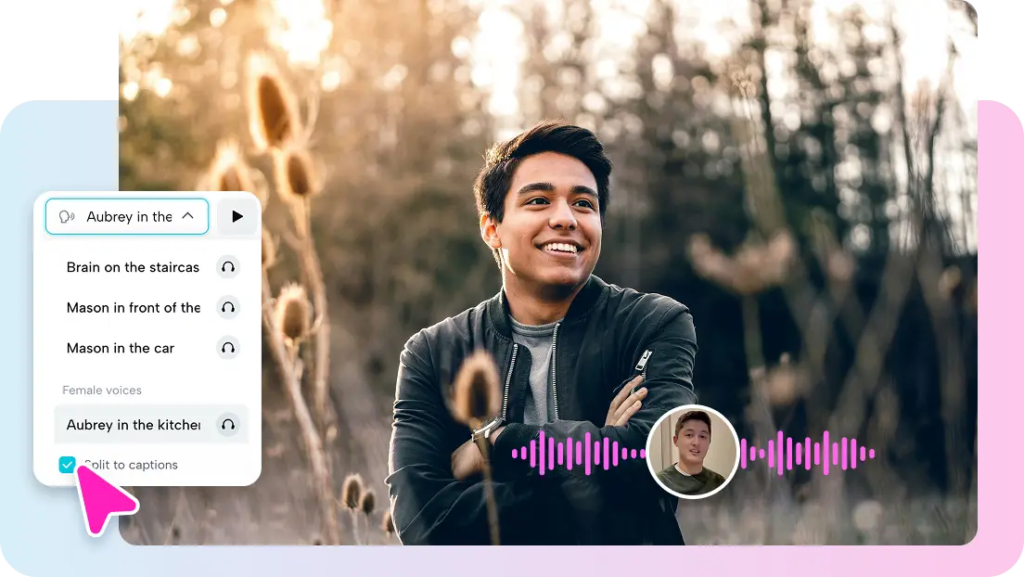
The traditional way of lip sync editing is hectic because all the words spoken ought to be perfectly aligned with the lips. Frame-by-frame alignment may be an undertaking that requires editors to scrub phonemes between entire sequences. Even minor audio-visual differences may need to be reshoot or retaken, further time-consuming the production process. Such delays affect general turnaround and reduce flexibility to experiment or iterate in content teams where deadlines are very hard.
In addition, traditional workflows are not scalable. Mammoth projects, multilingual or series demand titanic efforts since every scene is changed separately. As a result, the creative teams would spend time correcting mistakes instead of producing new content, slowing the rate of productivity and halting campaigns.
Understanding Automated Lip Sync AI and How It Works
Automated lip sync AI relies on precise voice-to-lip mapping powered by advanced algorithms. These are real-time audio analysers, which identify phonemes and predict the appropriate shapes of the mouth. The speech appears natural and expressive as AI then generates coordinated facial expressions. The technology is also used in the platform developed by Pippit to mechanise the alignment, but in minor details, such as the rounding of lips and jaw movement, remain authentic.
Unlike basic automation systems that offer fixed timing corrections, more advanced AI lip sync systems have the capability of dynamically examining the changes in speech and accents, and intonations. It allows every word to be manipulated to match the mouthings of the avatar without needing to fix it frame-by-frame, and professional results to be produced with the least effort.
Editing Time Reduction Through AI-Driven Voice Synchronisation
Voice recognition and AI save hours of editing time since previously repetitive tasks are automated. The manual alignment of waveforms with individual syllables that took a long time to do is now done automatically. The AI will adjust the time of different scenes, fixing small inconsistencies automatically and making the speech smooth. Video processing capabilities can make multiple videos simultaneously, whether for a social media campaign or an educational video.
In Pippit, it is simplified, and the high-quality outputs are obtained in just a fraction of the time. Artists can recover time per project and redirect that effort towards scripting, visual design, and response. It is especially handy in material that must be upgraded regularly or where time saved is directly proportional to the output.
Related Articles:
Top 10 AI Face Swap Tools for Photos
Joyland AI: Your Guide to Creating and Chatting with Custom AI Characters
Free AI Tools for Image Generation
Steps to Save Hours On Editing By Using Automated Lip Sync AI Tools
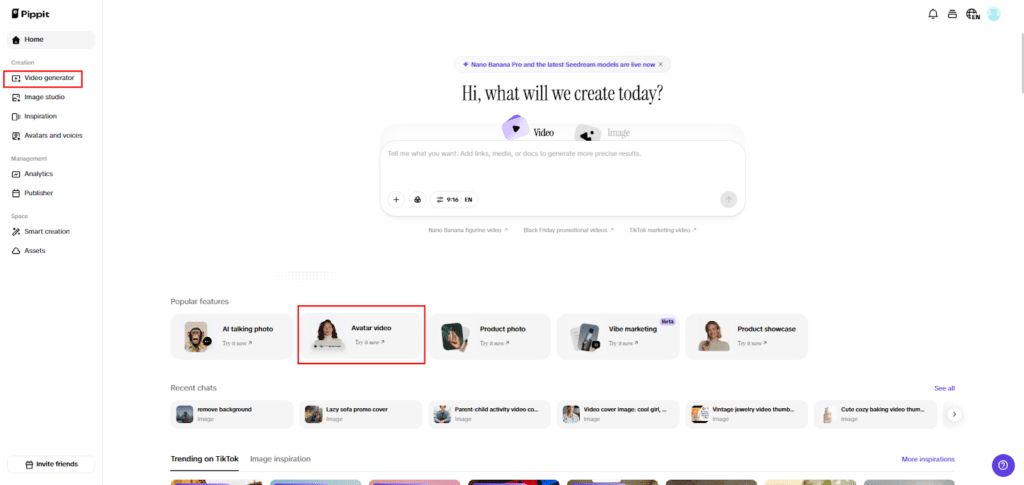
Step 1: Open the AI video workspace and pick avatars
Start by logging in to Pippit and opening “Video generator” from the left-hand menu. Under the Popular tools section, select “Avatar video” to access ready-made or custom AI avatars. This setup helps you sync voiceovers with avatars quickly, reducing manual editing time while keeping your videos dynamic and engaging.
Step 2: Match the avatar with your script needs
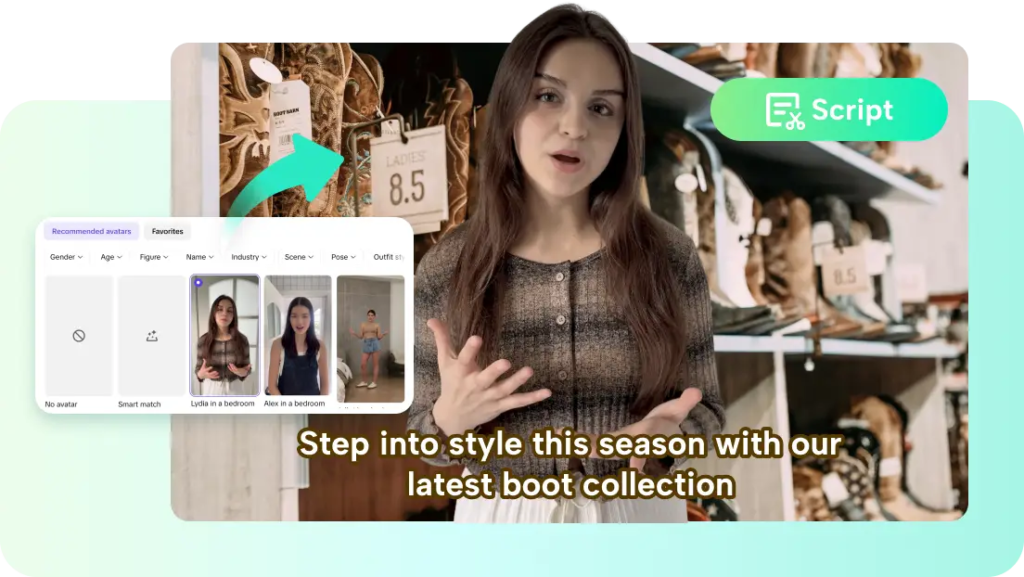
Browse through the “Recommended avatars” section and choose one that fits your content. Filters like gender, age, and industry help narrow your selection fast.
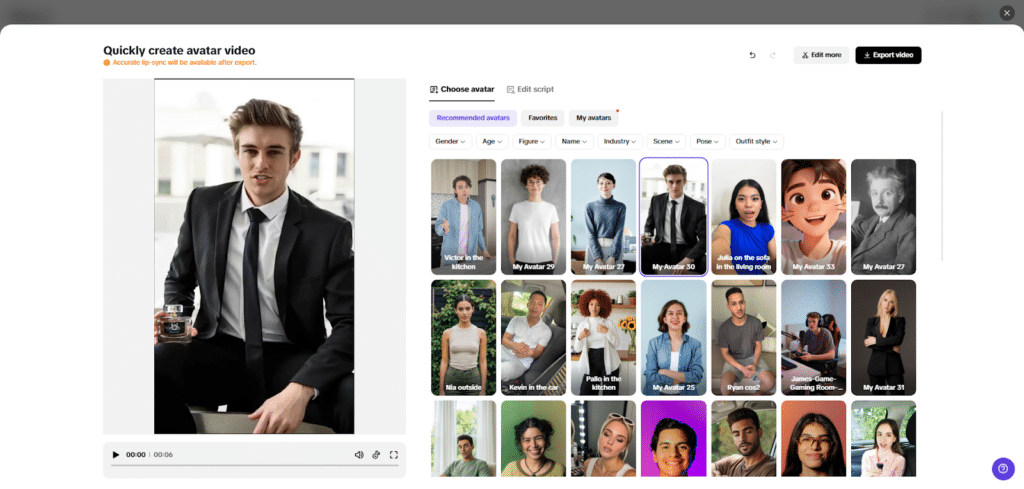
After selecting an avatar, click on “Edit script” to adjust the dialogue. You can enter text in multiple languages, and the avatar will lip-sync it accurately. Scroll to “Change caption style” to select caption designs that align with your brand and improve viewer attention.
Step 3: Finalise, export, and publish faster
Click “Edit more” to polish your video. The editor lets you fine-tune the script, adjust voice timing, or modify facial expressions for better accuracy. You can also add text overlays and background music to complete the video.
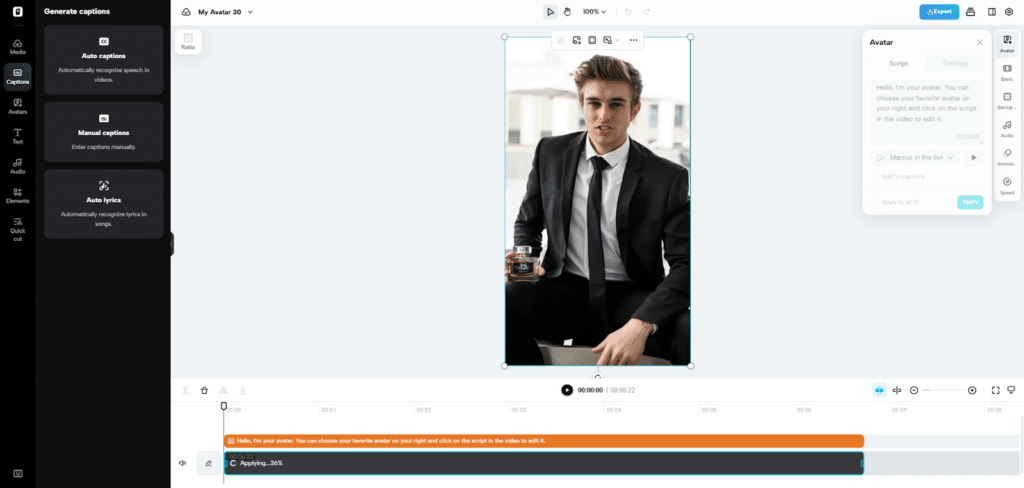
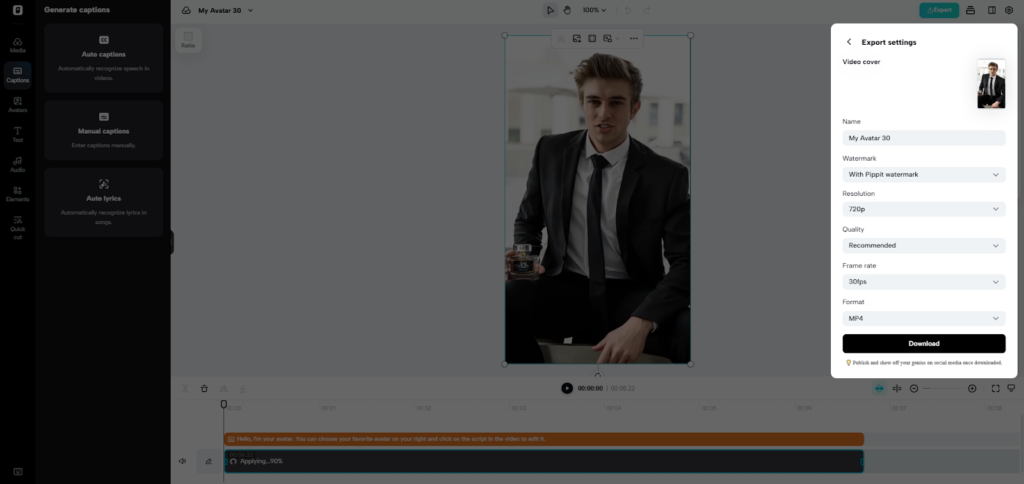
Once ready, click “Export” to download it in your preferred format. Use the Publisher feature to share directly on TikTok, Instagram, or Facebook, or schedule posts ahead of time. Track results through the Analytics section to understand engagement and improve future edits.
Where Automated Lip Sync AI Saves the Most Time?
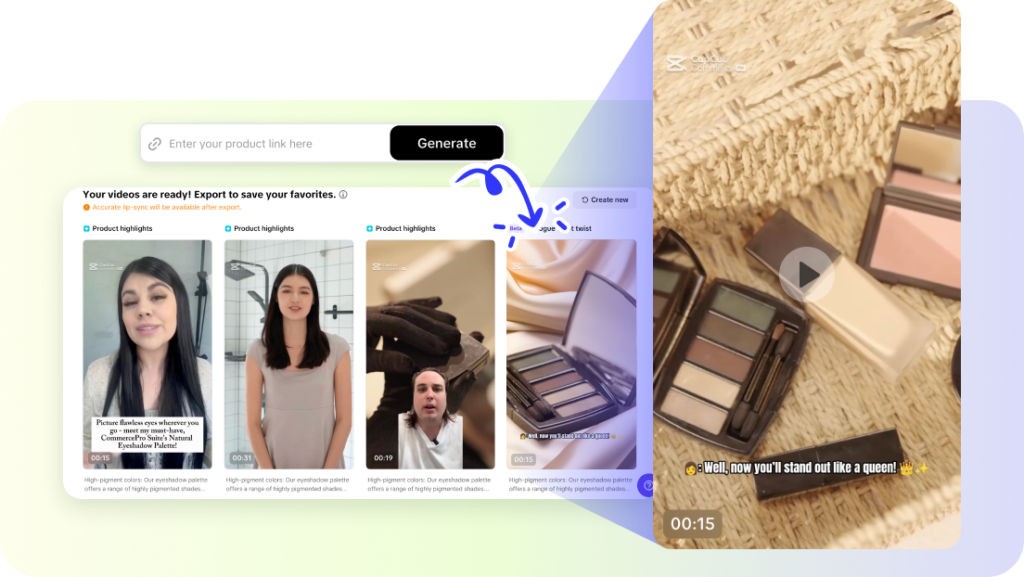
Automated lip sync AI offers the greatest efficiency in marketing videos and promotional content. There can be numerous variants of campaigns on different platforms, and AI can save you a lot of time on editing copies. There is also the plus of educational and training videos, as the ideally synchronised avatars are easier to teach and communicate with. Also producible on scale are videos of shorter length that demand a rapid turnaround and are highly engaging.
Automation assists in internal communications and explainer videos since teams are able to create professional presentations within a short period of time. In all these cases, photo to video AI capabilities can enhance content by transforming static assets into dynamic visuals, complementing automated lip synchronisation for fully immersive experiences.
Maintaining Quality While Accelerating Production
Realistic and interesting images should not be removed by automation. The Pippit balance, which is automated using AI, balances creativity and automation because it allows the AI technology to be used to control the movements of the mouth, facial expression and gestures very precisely. Too much automation can result in inhuman or robot-like appearances, but the AI of the platform does not lose the human touch.
The makers can modify the time, overlays, and expression dynamics to make videos natural and professional. This approach preserves the quality of the content, and the process of production is significantly quicker, and it ensures that the efficiency does not compromise the visual integrity, according to the editors.
Scaling Content Production Without Scaling Editing Teams
Automated lip sync AI allows teams to produce multilingual and multi-platform content without increasing staff. The AI avatars will offer a single branding in campaigns, corporate messages, marketing videos, etc. Pippit application enables the creation of lean content by generating video, editing, and analytics in a single process.
As the content requirements continue to grow, teams can produce more and more output in a short time with quality, consistency and future-proof workflows. Leveraging an AI video generator for automated lip sync enables larger volumes of polished content with fewer manual resources, saving time, reducing costs, and increasing overall creative output.
Conclusion
Automated lip sync AI is transforming video production by drastically reducing manual editing time. Pippit and similar tools allow producers to focus on the quality of content, stories, and interaction with the audience rather than making repetitive adjustments. It provides an effective and professional solution to a range of content needs, combining real-life lip movements, batch processing, and intelligent AI avatars.
The power that allows the teams to produce more without the required resources and be able to produce the same quality of work across projects is automation. The long-term consequences of such tools are self-evident: editors and creators spend less time on a project, the content production process becomes faster, and creative processes become future-proof. Pippit is a time-saving solution which will turn any complex editing into a smooth, efficient, and productive course.
