

Tool Information
What Is ChatGPT?
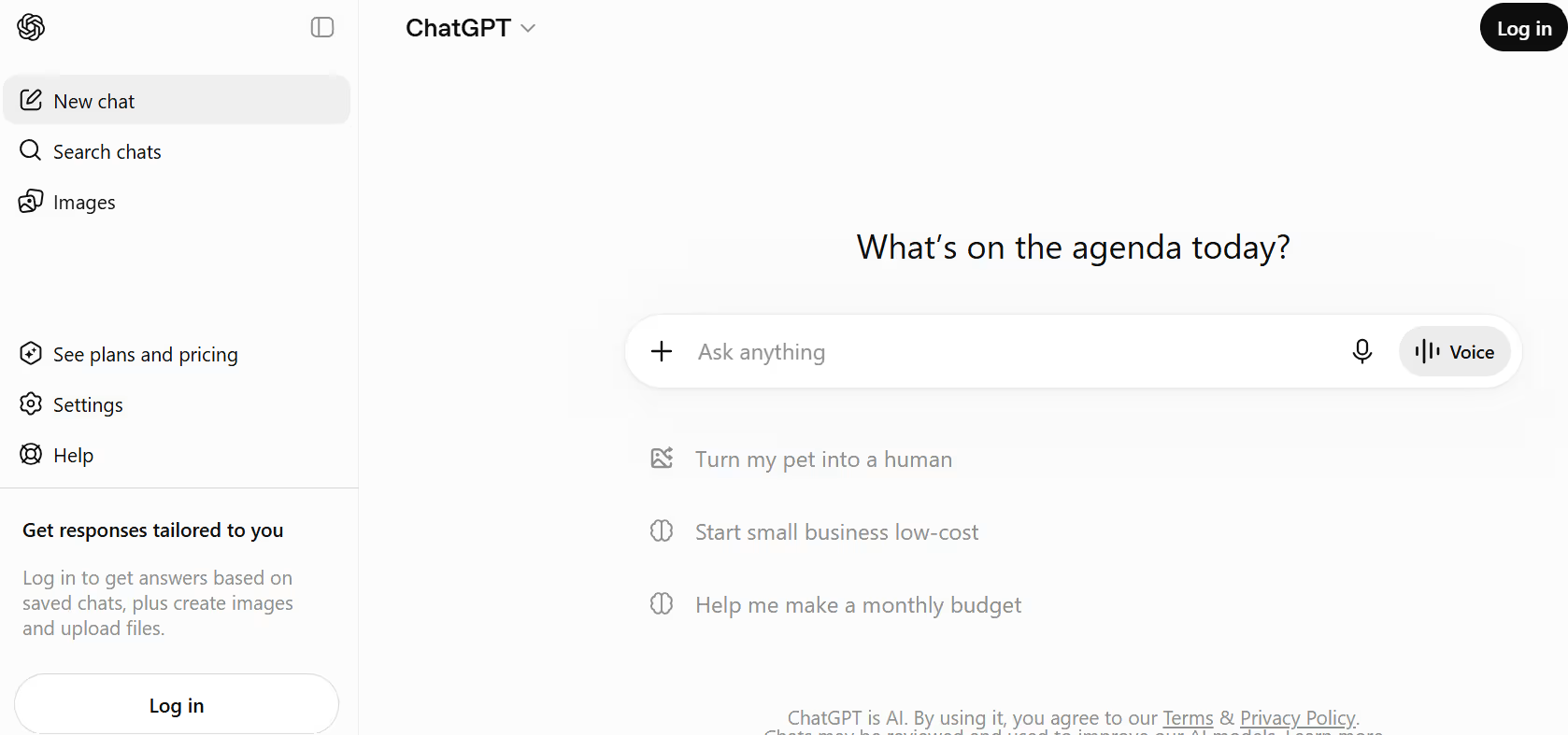
ChatGPT is a conversational AI assistant that can answer questions, explain concepts, draft and rewrite content, solve problems, translate languages and adapt to context across a conversation. It is built to help users get answers, find inspiration and be more productive in a wide range of everyday and professional tasks.
Depending on the plan and settings, ChatGPT can also use built-in tools such as web search, deep research, image input and generation, file uploads, data analysis, voice mode, Canvas, memory, projects and scheduled tasks. That makes it more than a simple chatbot because it can work with text, files, images and structured workflows in one place.
Who Is the Owner of ChatGPT?
ChatGPT is owned and operated by OpenAI. OpenAI publishes the product overview and pricing for ChatGPT directly on its own website.
Who Is the Founder of ChatGPT?
ChatGPT was created by OpenAI, whose co-founders include Sam Altman, Greg Brockman, Ilya Sutskever, Wojciech Zaremba and others. Since ChatGPT is a product rather than a separate company, the most accurate attribution is that it was developed by OpenAI rather than a single individual.
When Was ChatGPT Launched?
ChatGPT launched in 2022. It quickly became one of the most widely used consumer AI products and later expanded into a broader platform with voice, search, memory and custom assistants.
Where Is the Company Located?
OpenAI, the company behind ChatGPT, is based in San Francisco, California. OpenAI’s public product and pricing pages are maintained from that organization.
Key Features of ChatGPT
-
Conversational chat: ChatGPT can answer questions, explain ideas and follow complex instructions in natural language.
-
Writing and rewriting: It can draft emails, articles, summaries and other content, then rewrite them in a different tone or style.
-
Web search: ChatGPT can look up recent information on the internet when browsing is enabled.
-
Deep research: It can perform multi-step research tasks and produce cited, structured outputs from multiple sources.
-
Image input and generation: ChatGPT can analyze uploaded images and also generate or edit images from text prompts.
-
File uploads: Users can upload PDFs, documents and presentations for summarization, extraction or analysis.
-
Data analysis: It can run code in a secure environment to analyze spreadsheets and structured data.
-
Voice mode: Users can speak naturally with ChatGPT through supported apps and devices.
-
Canvas workspace: ChatGPT offers a shared editing space for writing, coding and debugging.
-
Memory and personalization: When enabled, it can remember useful facts and preferences across chats.
Best Use Cases of ChatGPT
ChatGPT is best for people who need a flexible assistant for writing, learning, brainstorming, research and day-to-day productivity. Students, professionals, creators and developers all use it because it can adapt to many different tasks without changing tools.
It is also useful for teams that want a mix of document handling, analysis, coding help and fast answers in one interface. With projects, custom GPTs and scheduled tasks, it can support longer workflows instead of only one-off questions.
F.A.Q (9)
Pros and Cons
Pros
- Versatile Across Many Tasks
- Multimodal Support
- File Uploads
- Custom GPTs
- Memory
- Projects
- Deep Research
Cons
- Advanced Features May Require Paid Plans
- Usage Limits On Free Tier
- Responses Can Still Be Imperfect
- Best Results Depend On Prompt Quality
Reviews
You must be logged in to submit a review.
No reviews yet. Be the first to review!


Similar Tools

AI website builder, hosting and optimization for WordPress
2026-07-11
from $10/mo

Speak your thoughts and turn them into editable text directly in your browser. Zahvox is a free voice-to-writing tool built for faster everyday writing
2026-10-05
Free