
On February 4, 2026, OpenAI rolled out GPT-5.3 Codex, positioning it as the company’s most capable agentic coding model yet, and something more ambitious: the first AI system OpenAI explicitly says was “instrumental in creating itself”. If that sounds like science fiction bleeding into reality, that’s because it is starting to.
The launch comes at a moment when the AI coding race has become cutthroat, with companies like Anthropic, Google, and startups such as Cursor and Replit all racing toward the same goal: an AI that doesn’t just write code, but actually ships features, handles debugging, and runs autonomously for hours or even days. GPT-5.3 Codex is OpenAI’s latest answer to that challenge, and it is a signal that we’re entering a new phase where AI tools stop being assistants and start becoming coworkers.
Below, we’ll unpack what OpenAI is saying, what it likely means in practice, and why this moment fits squarely into the accelerating AI coding race.
What Is GPT-5.3 Codex?
GPT-5.3 Codex is OpenAI’s newest coding-focused AI model, designed to handle long-horizon, real-world software development tasks rather than just answering quick coding questions in a chat window.
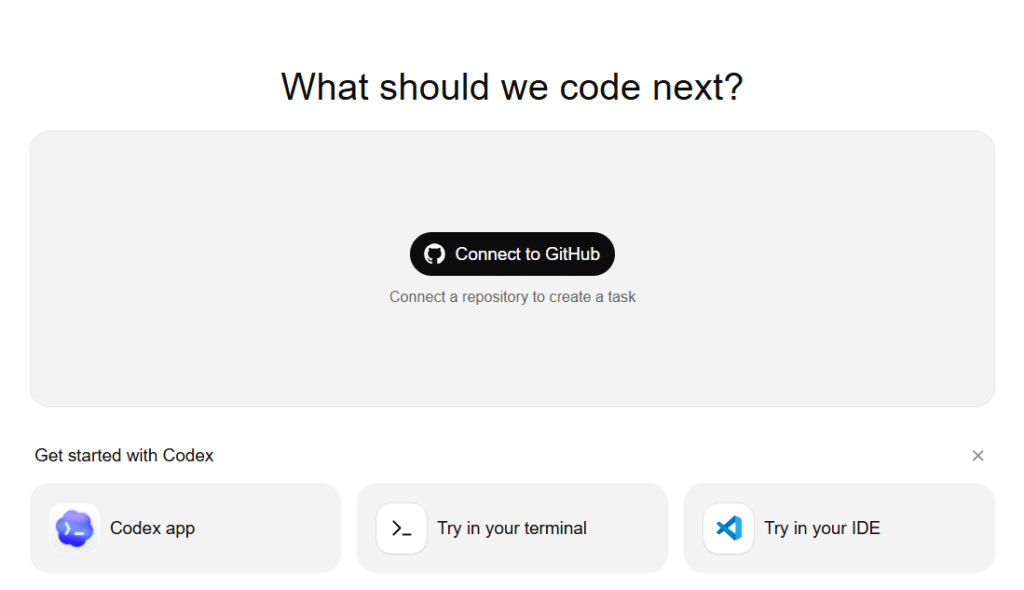
It merges the coding strength of GPT-5.2 Codex with the broader reasoning and professional knowledge capabilities of GPT-5.2, aiming to be both technically sharp and contextually intelligent.
This is not the original Codex from 2021, which was more of a GitHub Copilot engine for autocomplete. GPT-5.3 Codex is positioned as a full-fledged agentic system that can research, plan, execute, debug, and iterate across an entire software workflow without needing constant human intervention.
Key Capabilities of GPT-5.3 Codex
- Code generation and understanding: The model can generate production-level code, understand legacy codebases, and refactor complex systems with minimal guidance.
- Faster development cycles: OpenAI claims GPT-5.3 Codex is around 25% faster than GPT-5.2 Codex, which matters when the model is running tasks that span hours or days.
- Improved accuracy and reasoning: By combining frontier coding ability with general reasoning, the model handles ambiguous prompts better and defaults to sensible feature choices instead of bare-bones outputs.
How GPT-5.3 Codex Helped Build Itself?
This is where the story gets interesting. OpenAI publicly stated that GPT-5.3 Codex is the company’s first model that was “instrumental in creating itself”. What does that actually mean?
According to OpenAI’s blog post, the Codex team used early versions of GPT-5.3 Codex to debug training runs, manage deployment pipelines, and analyze test results during the model’s own development.
OpenAI wrote:
“The Codex team used early versions to debug its own training, manage its own deployment, and diagnose test results and evaluations. Our team was blown away by how much Codex was able to accelerate its own development”.
This is not fully autonomous recursive self-improvement in the sci-fi sense, but it is a clear step toward AI systems assisting meaningfully in their own iteration cycles. Anthropic made a similar claim recently with Claude Cowork, and engineers at top AI labs now openly admit that most of their daily coding work is already handled by AI tools.
What “Self-Building” Means in Practice?
Let’s be precise about what OpenAI is and isn’t claiming:
- Assisted code writing and refactoring: Early Codex versions wrote scaffolding, fixed bugs, and refactored infrastructure code as part of the development pipeline.
- Automated testing and iteration: The model ran tests, analyzed failures, and proposed fixes, speeding up the feedback loop.
- Human oversight and guardrails: OpenAI’s system card clarifies that humans were still in the loop for final decisions, training adjustments, and safety checks.
What OpenAI says vs. what it means:
OpenAI says: “Instrumental in creating itself.”
What it means: The model was a productive member of the engineering team building it, not a fully autonomous self-modifier.
Read the Latest News:
Why Indian IT Stocks Fell After Anthropic’s New Claude “Cowork” Legal AI Tools?
Google’s Big AI Upgrade for Chrome: Gemini Takes Over Browsing
OpenAI Prism: AI Workspace for Medical & Scientific Research
Why GPT-5.3 Codex Matters?
This launch is significant for three reasons.
1. Implications for software development productivity: If a model can handle tasks that previously took senior engineers days or weeks, and run those tasks autonomously overnight, the productivity multiplier for engineering teams becomes enormous.
2. Shifts in how engineering teams may work: The emphasis on multi-agent workflows and the new Codex Mac app signals a future where developers orchestrate multiple AI agents working in parallel rather than coding line-by-line themselves.
3. Broader significance for AI autonomy: This is one of the clearest examples yet of AI systems actively participating in their own evolution, a milestone that AI safety researchers have been tracking for years.
The AI Coding Race Context
GPT-5.3 Codex does not exist in a vacuum. The AI coding space is heating up fast.
- Competitive pressure: Anthropic’s Claude Cowork, Google’s Gemini Code Assist, Cursor, Replit Agent, and GitHub Copilot Workspace are all competing for the same developer mindshare. OpenAI’s timing, just days after Anthropic’s legal AI launch, feels deliberate.
- Timing relative to rivals: OpenAI launched this model on February 4, 2026, the same week it released a dedicated Codex Mac app, signaling a sharper focus on agentic developer tools rather than just chat interfaces.
- How it fits the broader AI ecosystem: GPT-5.3 Codex is part of a larger shift where AI models are no longer just “Q&A bots” but autonomous agents that can perform real work over long time horizons.
Industry Reactions and Early Coverage
Media framing of the announcement has emphasized speed, autonomy, and the “self-building” angle. Ars Technica highlighted the focus on “mid-turn steering and frequent progress updates,” suggesting the model is designed to be interruptible and steerable without losing context.
Skepticism has also surfaced, particularly around whether “helping build itself” is genuinely novel or just good marketing for standard AI-assisted development workflows that are already common inside AI labs.
GPT-5.3 Codex vs. Earlier Codex Versions
| Feature | Original Codex (2021) | GPT-5.2 Codex (2025) | GPT-5.3 Codex (2026) |
| Primary use case | Code autocomplete | Coding assistant | Autonomous agentic coding |
| Reasoning ability | Limited | Moderate | Frontier reasoning + coding |
| Task horizon | Seconds to minutes | Minutes to hours | Hours to days (24+ hour runs) |
| Self-improvement claim | No | No | Yes (helped build itself) |
| Speed vs predecessor | Baseline | Faster | ~25% faster than GPT-5.2 Codex |
Recent AI Coding Model Launches (Timeline)
- December 2025: GitHub Copilot Workspace enters beta
- January 2026: Anthropic launches Claude Cowork with legal automation focus
- February 2026: OpenAI launches GPT-5.3 Codex with self-building claims
- February 2026: OpenAI releases dedicated Codex Mac app for multi-agent workflows
What Comes Next for AI Coding Models?
- Expected evolution: Self-improving systems will likely become the norm, not the exception. If GPT-5.3 Codex can debug its own training, GPT-6 Codex might propose architectural changes or optimize its own inference pipeline.
- Potential risks and open questions: The closer AI gets to modifying its own training and deployment, the harder it becomes to maintain human oversight and alignment guarantees. OpenAI’s system card acknowledges these concerns but does not fully resolve them.
- Signals from OpenAI’s roadmap: The launch of a dedicated Codex Mac app and the emphasis on multi-agent workflows suggest OpenAI is betting heavily on “agentic coding” as the next platform shift.
FAQs
Is GPT-5.3 Codex available now?
Yes, it is accessible through the command line, IDE extensions, web platform, and the new macOS Codex app. API access is expected soon.
Can GPT-5.3 Codex replace software engineers?
Not yet. It is better framed as a productivity multiplier that handles routine and complex tasks, but still requires human judgment, oversight, and strategic direction.
What programming languages does GPT-5.3 Codex support?
GPT-5.3 Codex is designed to work across multiple programming languages including Python, JavaScript, TypeScript, Java, C++, Go, Rust, and more. Its training includes both popular and niche languages, though performance is strongest in widely-used languages with extensive training data.
Can GPT-5.3 Codex work with proprietary or internal codebases?
Yes, the model can understand and work with proprietary codebases when given appropriate context. However, organizations should review OpenAI’s data usage policies carefully, especially regarding whether code inputs are used for training or stored. Enterprise customers typically have stronger privacy guarantees than free-tier users.
How much does GPT-5.3 Codex cost to use?
Pricing details vary by access method. The command-line tool and IDE extensions may have different rate limits for free ChatGPT users versus paid subscribers. API access, when available, will likely follow token-based pricing similar to GPT-5 models. Check OpenAI’s pricing page for the most current information.
Does GPT-5.3 Codex understand documentation and comments in non-English languages?
While GPT-5.3 Codex is multilingual, its strongest performance is with English-language comments and documentation. It can handle code with non-English comments in major languages like Chinese, Spanish, and Hindi, but accuracy may vary depending on language and technical context.
Can GPT-5.3 Codex integrate with version control systems like Git?
The model itself does not directly interact with Git repositories, but the Codex Mac app and IDE extensions may include workflows that help stage commits, write commit messages, and suggest branch strategies. Full version control integration depends on the specific tooling layer you’re using.
What happens if GPT-5.3 Codex writes insecure or buggy code?
Like all AI coding tools, GPT-5.3 Codex can generate code with security vulnerabilities or logic errors. OpenAI recommends human review, automated testing, and security scanning as part of any workflow. Developers remain fully responsible for code quality, security, and compliance regardless of AI assistance.
Disclaimer: This article is based on OpenAI’s official announcements and independent media coverage as of February 2026. Features, availability, and capabilities may evolve. Users should verify current details via OpenAI’s official channels before making adoption decisions.
