
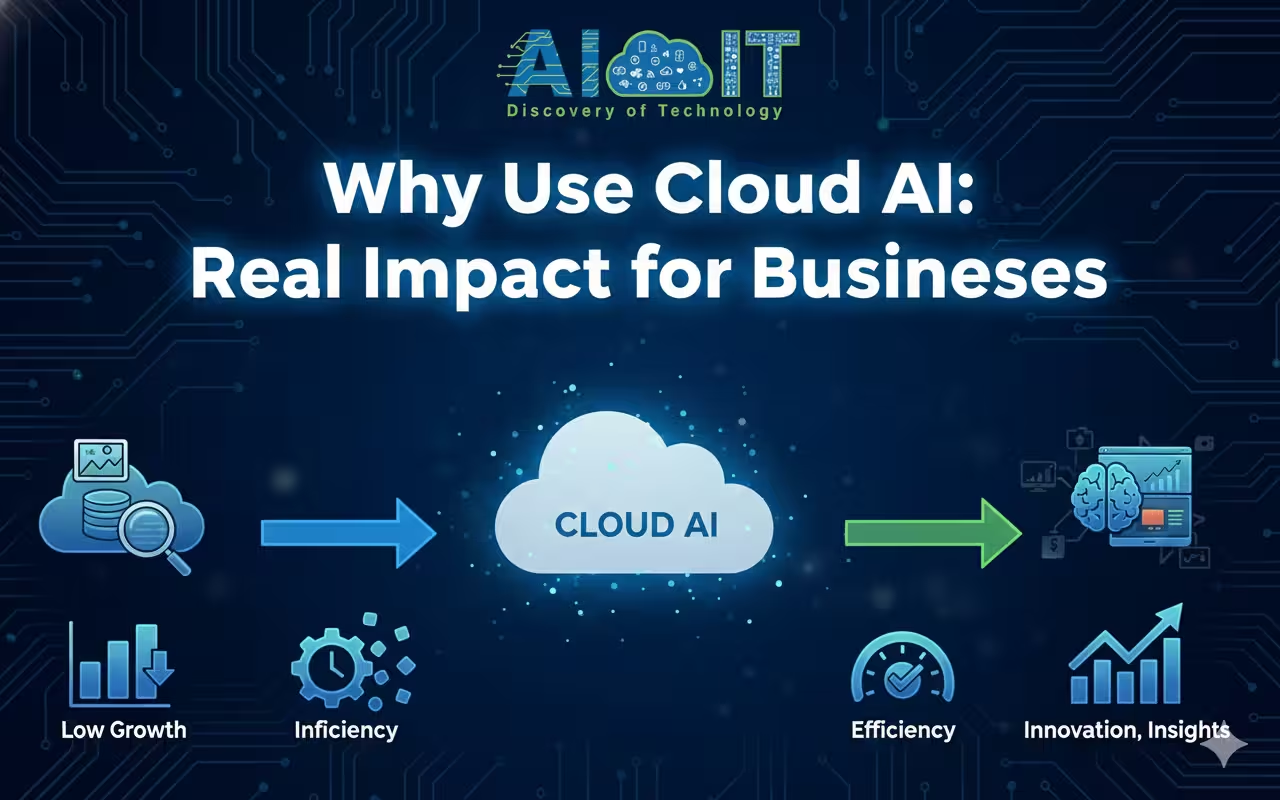
Cloud AI is reshaping how organizations work, and more than 60 percent of American companies are already adopting these intelligent systems. As businesses face growing pressure to stay competitive, rapid access to powerful AI tools without huge infrastructure costs matters more than ever. This article reveals the real impact of Cloud AI, helping you understand its true benefits and what it means for any American enterprise ready to step into the future.
Key Takeaways
| Point | Details |
| Cloud AI Benefits | Cloud AI democratizes access to advanced AI technologies, enabling businesses to scale operations without heavy investments. |
| Scalability and Flexibility | Cloud AI allows real-time adjustment of resources, providing businesses with the ability to optimize performance dynamically. |
| Cost Efficiency | Through intelligent automation, Cloud AI significantly reduces operational costs and streamlines resource allocation. |
| Built-In Services | Modern Cloud AI platforms offer pre-configured intelligent services, facilitating rapid technological implementation with minimal expertise. |
What Cloud AI Really Means?
Cloud AI represents a transformative technological convergence where artificial intelligence capabilities are delivered and enhanced through cloud computing infrastructure. At its core, cloud AI integrates machine learning algorithms, computational power, and scalable data storage to enable businesses to leverage advanced intelligent technologies without massive upfront infrastructure investments.
The fundamental premise of cloud AI is democratizing access to sophisticated technological capabilities. By exploring the integration of cloud computing and artificial intelligence, organizations can dramatically accelerate digital transformation strategies. This approach allows companies to tap into powerful AI resources on demand, scaling computational needs precisely according to current business requirements. Companies no longer need enormous dedicated data centers or specialized hardware to access cutting-edge machine learning technologies.
Under this model, cloud AI provides remarkable flexibility for businesses across multiple domains. Enterprise capabilities can be significantly accelerated through AI and cloud convergence, enabling remarkable improvements in operational efficiency. Key capabilities include automated data processing, predictive analytics, intelligent customer service interfaces, and dynamic resource allocation. Businesses can now implement sophisticated AI solutions without navigating complex technological barriers or making substantial capital investments.
Pro Tip – Cloud AI Strategy: Conduct a thorough assessment of your current technological infrastructure and identify specific business processes where intelligent automation could generate immediate value. Start with pilot projects that demonstrate clear return on investment and scalability potential.
The following table summarizes how cloud AI impacts various business functions:
| Business Function | Cloud AI Enhancement | Resulting Value |
| Customer Service | Intelligent chatbots and NLP | Faster, more accurate support |
| Operations | Automated data processing | Reduced manual workload |
| Decision Making | Predictive analytics | Better forecasting |
| Infrastructure | On-demand scalable resources | Lower capital expenditure |
| Risk Management | Adaptive threat detection | Improved security response |
Performance benefits of cloud AI:
Instant scalability
Reduced infrastructure costs
Access to advanced machine learning models
Global computational resources
Flexible deployment options
How Cloud AI Scales And Adapts?
Cloud AI’s remarkable scalability stems from its inherent ability to dynamically adjust computational resources in real time. Adaptive infrastructure allows businesses to rapidly expand or contract their technological capabilities without significant hardware investments, creating a fluid and responsive technological ecosystem.

Hybrid decentralized frameworks utilizing graph neural networks enable unprecedented flexibility in application placement and resource management. This approach transforms traditional computing constraints by introducing intelligent, automated systems that can redistribute computational workloads seamlessly across distributed networks. Businesses can now optimize their technological infrastructure dynamically, responding to fluctuating demands with unprecedented precision and efficiency.
The sophistication of modern cloud AI extends beyond simple resource allocation. Scalability optimization frameworks for cloud-based AI inference services now incorporate advanced reinforcement learning techniques that dramatically enhance performance. These intelligent systems can predict computational requirements, balance complex workloads, and minimize latency by automatically adjusting resources in milliseconds. Such capabilities represent a quantum leap in technological adaptability, allowing enterprises to maintain peak operational efficiency regardless of computational complexity.
Pro Tip – Scaling Strategy: Implement a phased cloud AI adoption approach that begins with low-risk, high-visibility projects. Develop clear performance metrics and continuously monitor system responsiveness to validate and refine your scaling mechanisms.
Key Adaptive Capabilities:
Real-time resource redistribution
Intelligent workload balancing
Automated performance optimization
Predictive computational planning
Seamless infrastructure elasticity
How Cloud AI Cuts Costs And Speeds Deployment?
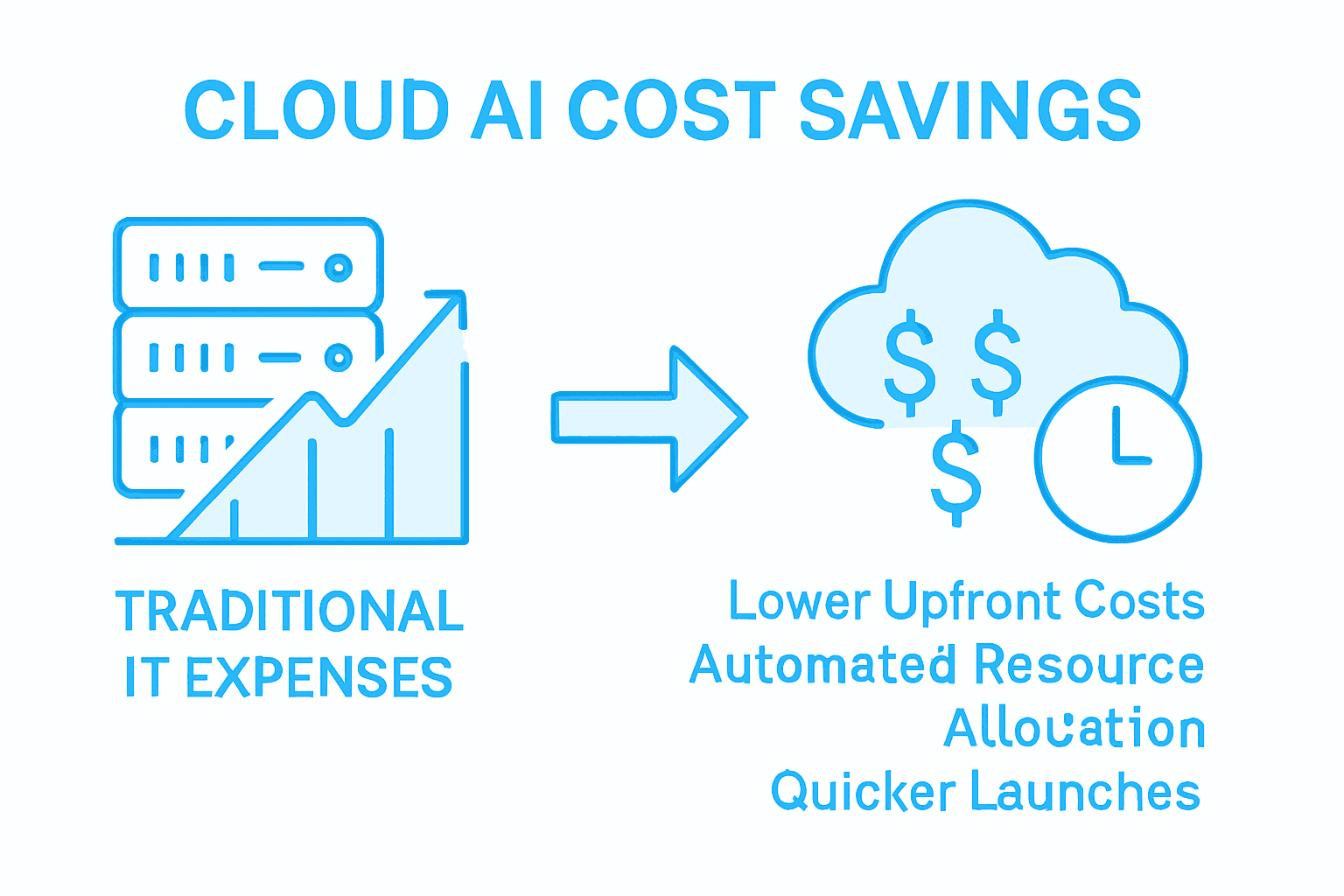
Cloud AI represents a revolutionary approach to reducing operational expenses and accelerating technological deployment for modern enterprises. Cost optimization through intelligent automation transforms traditional infrastructure management, enabling businesses to dramatically streamline their technological investments and resource allocation strategies.
AI-driven automation of cloud infrastructure management fundamentally reshapes how organizations approach technological deployment. By implementing machine learning algorithms, companies can automatically detect inefficiencies, optimize resource utilization, and reduce manual intervention. This approach eliminates substantial overhead costs associated with traditional IT infrastructure management, allowing businesses to reallocate financial resources toward strategic innovation and growth initiatives.
Machine learning techniques for cloud resource decision support enable unprecedented levels of operational efficiency. Intelligent systems can now predict computational requirements, automatically scale resources, and minimize unnecessary expenditures. These advanced algorithms analyze historical usage patterns, forecast potential bottlenecks, and dynamically adjust infrastructure to maintain optimal performance while keeping costs minimal. Such capabilities represent a paradigm shift in technological resource management, providing businesses with unprecedented financial flexibility and operational agility.
Pro Tip – Cost Reduction Strategy: Conduct a comprehensive audit of your current cloud infrastructure, identifying underutilized resources and potential optimization opportunities. Implement progressive AI-driven monitoring tools that provide granular insights into computational spending.
Here’s a comparison of traditional IT infrastructure vs. cloud AI solutions:
| Aspect | Traditional IT Infrastructure | Cloud AI Approach |
|---|---|---|
| Scalability | Limited, requires upgrades | Instant, on-demand |
| Upfront Costs | High hardware investment | Minimal initial expense |
| Maintenance | Manual, resource-intensive | Automated with AI monitoring |
| Deployment Speed | Weeks to months | Hours to days |
| Access to AI Models | Typically restricted | Broad, up-to-date availability |
Key Cost Reduction Mechanisms:
Automated resource allocation
Predictive computational scaling
Intelligent usage optimization
Real-time efficiency monitoring
Dynamic infrastructure adjustment
Built‑In AI Services You Can Leverage
Cloud AI platforms now offer an unprecedented array of built-in intelligent services that transform how businesses approach technological innovation. These pre-configured AI capabilities enable organizations to rapidly implement advanced technological solutions without requiring extensive in-house artificial intelligence expertise or complex infrastructure development.
AI tools for developers encompass a wide range of sophisticated services designed to accelerate technological implementation. Typical built-in AI services include natural language processing engines, predictive analytics frameworks, image and video recognition algorithms, automated machine learning platforms, and intelligent data processing systems. These services allow businesses to seamlessly integrate advanced computational capabilities into existing workflows, reducing development time and minimizing technological barriers.
The most powerful built-in AI services provide modular, adaptable solutions that can be customized across multiple business domains. Enterprises can leverage intelligent chatbots for customer service, implement automated data classification systems, develop predictive maintenance algorithms, create personalized recommendation engines, and build advanced fraud detection mechanisms. Each service operates as a sophisticated, pre-trained computational tool that can be rapidly deployed and scaled according to specific organizational requirements.
Pro Tip – Service Selection Strategy: Conduct a comprehensive audit of your current technological infrastructure to identify specific areas where built-in AI services can generate immediate operational improvements. Prioritize services that align directly with your core business objectives and offer clear, measurable performance enhancements.
Key Built-In AI Service Categories:
Natural Language Processing
Predictive Analytics
Image Recognition
Automated Machine Learning
Intelligent Data Processing
Security, Compliance, And Governance
Cloud AI introduces complex challenges and sophisticated solutions for enterprise security, requiring businesses to develop comprehensive strategies that balance technological innovation with robust protective mechanisms. Governance frameworks have evolved dramatically, transforming traditional cybersecurity approaches into intelligent, adaptive systems capable of anticipating and mitigating emerging digital threats.
Challenges associated with cloud computing adoption encompass critical considerations around data privacy, regulatory compliance, and security infrastructure. Organizations must navigate intricate regulatory landscapes, implementing multi-layered security protocols that protect sensitive information while maintaining operational flexibility. Advanced cloud AI systems now integrate intelligent threat detection algorithms, real-time monitoring capabilities, and automated compliance verification mechanisms that can instantly identify and respond to potential security vulnerabilities.
Integration of AI and cloud computing technologies provides unprecedented opportunities for developing sophisticated security governance models. Intelligent systems can now perform continuous risk assessments, automatically update security protocols, and create dynamic authorization frameworks that adapt to changing technological environments. These advanced approaches move beyond traditional static security models, creating responsive, intelligent protective ecosystems that can predict, prevent, and rapidly mitigate potential digital threats.
Pro Tip – Security Implementation Strategy: Develop a comprehensive security roadmap that prioritizes continuous monitoring, automated threat detection, and adaptive compliance mechanisms. Regularly conduct thorough security audits and invest in employee training programs that enhance organizational cybersecurity awareness.
Key Security Governance Components:
Intelligent threat detection
Automated compliance verification
Dynamic risk assessment
Continuous monitoring systems
Adaptive authorization frameworks
Cloud AI In Real‑World Use Cases
Cloud AI has transformed theoretical potential into practical, measurable business solutions across multiple industries, demonstrating remarkable capabilities that extend far beyond traditional technological boundaries. Intelligent systems are now solving complex challenges with unprecedented efficiency, creating tangible value for organizations willing to embrace cutting-edge technological approaches.
Benefits of artificial intelligence in retail showcase how cloud AI can revolutionize traditional business models. In the retail sector, intelligent systems now enable hyper-personalized customer experiences, predictive inventory management, dynamic pricing strategies, and automated customer service interactions. Advanced machine learning algorithms analyze massive consumer datasets, generating insights that allow businesses to anticipate customer needs, optimize supply chains, and create targeted marketing campaigns with extraordinary precision.
Beyond retail, cloud AI demonstrates transformative potential across healthcare, finance, manufacturing, and transportation sectors. Intelligent diagnostic systems can now analyze medical imagery with accuracy surpassing human experts, financial platforms leverage predictive algorithms to detect fraudulent transactions in milliseconds, manufacturing robots use real-time machine learning to optimize production processes, and autonomous transportation systems continuously adapt to complex environmental conditions. These applications represent more than technological innovations they represent fundamental reimaginings of how intelligent systems can solve intricate human challenges.
Pro Tip – Implementation Strategy: Start with focused, low-risk pilot projects that demonstrate clear, measurable outcomes. Prioritize use cases with immediate, quantifiable impact and build organizational AI literacy through incremental, successful deployments.
Key Real-World AI Application Domains:
Personalized customer experiences
Predictive maintenance
Intelligent risk assessment
Automated decision support
Dynamic resource optimization
Unlock the Full Potential of Cloud AI for Your Business
Struggling with high infrastructure costs and complex AI deployments is a common challenge highlighted in the article. Businesses seek scalable, cost-efficient solutions that deliver real-time adaptability, intelligent automation, and robust security. Whether your goal is faster deployment, smarter resource management, or enhanced predictive capabilities, understanding and leveraging concepts like automated performance optimization and adaptive authorization frameworks is essential.
At AICloudIT, we bring the latest insights on generative AI, cloud computing trends, and cybersecurity to help you navigate these challenges efficiently. Explore how our expert resources and solutions align with your journey toward intelligent cloud adoption at AICloudIT. Unlock the power of cloud AI technologies with proven strategies designed to cut costs and accelerate innovation.
Frequently Asked Questions
What are the main advantages of using Cloud AI for businesses?
Cloud AI offers instant scalability, reduced infrastructure costs, access to advanced machine learning models, and flexible deployment options, enabling businesses to optimize operations and enhance efficiency.
How does Cloud AI improve operational efficiency?
Cloud AI automates data processing, conducts predictive analytics, and provides intelligent customer service interfaces, which improves decision-making and reduces manual workloads across various business functions.
What cost benefits does Cloud AI provide compared to traditional IT solutions?
Cloud AI minimizes upfront costs, automates resource allocation, and optimizes usage, leading to significant savings in operational expenses while enabling agile and rapid deployment of technologies.
How can businesses ensure security and compliance when using Cloud AI?
Businesses can implement comprehensive security strategies that include intelligent threat detection, automated compliance verification, and continuous monitoring to adapt to emerging digital threats effectively.
