
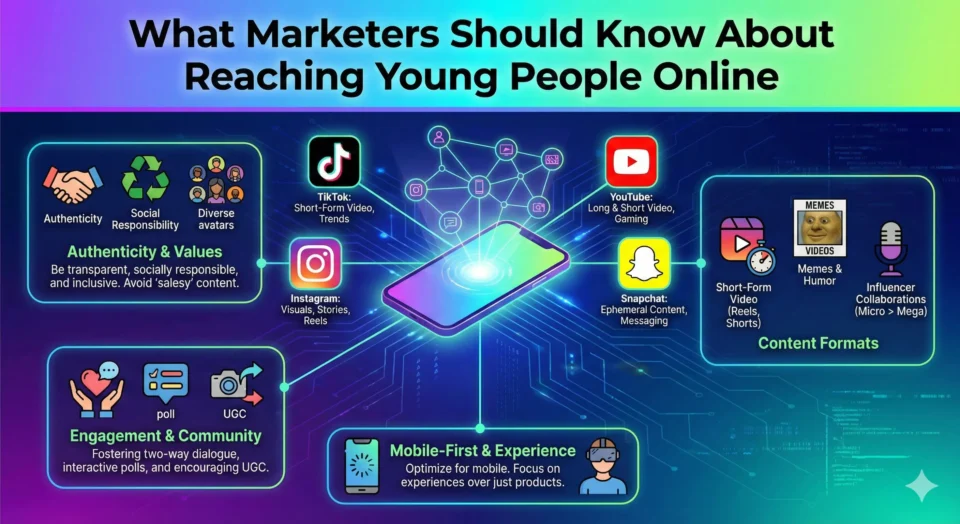
Reaching young people online today is a completely different game than it was even a few years ago. The modern youth, mostly Gen Z and Gen Alpha, don’t just “use” the internet. They live there. They aren’t interested in traditional ads or polished commercials. Instead, they value authenticity, quick entertainment, and brands that actually stand for something.
If you’re a marketer, you have to meet them where they are, which is usually on platforms like TikTok, Facebook, or Instagram. They have a built-in “filter” for anything that feels fake or forced. To get their attention, you need to understand their unique digital habits, from how they search for products to why they trust creators.
This guide will break down what you need to know to connect with this fast-moving audience in a way that feels natural, not intrusive.
Before that know more about: Cost-effective Social Media Marketing Strategies
Understanding Platform Migration and Preferences
Young people frequently shift between social media platforms, and what’s popular today may be outdated tomorrow. These moves aren’t random. They reflect a desire for authentic, visually engaging, and interactive content. Marketers need to stay agile and understand the unique culture and style of each platform to connect effectively.
For example, TikTok rewards creativity and authenticity over polished production, while Instagram remains strong for lifestyle and aesthetic content. YouTube serves as both entertainment and education.
According to Statista, in September 2023, YouTube was the most popular social media platform globally, with 97 percent of users reporting usage. Among Gen Z, 96 percent reported using YouTube, making it their top platform.
Facebook usage stayed steady among the general population, with about eight in 10 users, but its popularity among Gen Z fell to just four in 10. Understanding these trends is key to crafting content that resonates with today’s youth.
The Authenticity Imperative
To young consumers, authenticity is everything. They have a built-in “BS detector” for manufactured campaigns and will quickly call out brands that feel fake. This generation prefers transparency and real stories over polished corporate messaging. User-generated content and behind-the-scenes looks perform much better because they feel like a community, not a sales pitch.
However, as The Guardian points out, there is a “peculiar modern dystopia” where brands try too hard to be “raw and unfiltered.” Multibillion-dollar companies often colonize TikTok comment sections, using jaded, teen-like tones that can actually feel even less authentic.
The key is to recognize that real self-expression can’t always be documented or optimized for a public brand. Instead of performing “authenticity” harder, companies should focus on genuine, consistent values. Young people want to support brands that act like real people, flaws and all, rather than corporations pretending to be their peers.
Social Responsibility as a Non-Negotiable
Today’s young consumers expect brands to lead with their values. Things like protecting the environment, supporting mental health, and treating workers fairly aren’t just “nice to have.” They are requirements. Gen Z, in particular, uses their spending power to support companies that care about more than just making money.
However, young people can spot “fake” activism from a mile away. They want to see real proof, not just empty promises, and they will research everything from a company’s supply chain to its labor practices. A major example of this demand for accountability is the ongoing Facebook lawsuit.
According to TorHoerman Law, plaintiffs claim that platform features have led to serious issues like depression, eating disorders, and self-harm among young users. For marketers, this means advertising to youth requires high ethical standards. It’s important to avoid the “comparison culture” that hurts self-esteem.
By using realistic photos and inclusive messages, brands can actually help improve the well-being of the next generation instead of just trying to sell them something.
Check these: 10 Tips for Successful Social Media Marketing Strategy
Short-Form Video Dominance
The rise of short-form video has completely changed how young people consume content. Whether it’s TikTok, Instagram Reels, or YouTube Shorts, these quick clips are now the primary way youth discover new products and entertainment. According to ResearchGate and recent data, videos under two minutes earn the highest engagement, but the real “sweet spot” is between 30 and 60 seconds.
On platforms like TikTok, videos shorter than 15 seconds often go viral because they are designed to hook viewers instantly. In fact, most successful ads make their message clear within the first three seconds to prevent users from scrolling past.
Marketers must adapt by creating “snackable” content that feels like a creative burst rather than a boring commercial. Using trends and challenges lets brands turn young viewers into collaborators. This approach helps messages spread naturally through the algorithm’s organic reach.
The Creator Economy and Influencer Marketing
Young consumers often trust micro-influencers more than mega-celebrities because they feel more relatable. According to HBR, followers value a creator’s ongoing, real-world experience over formal titles. For example, beauty influencer Jackie Aina built trust through candid reviews and inclusivity rather than credentials.
Similarly, Canon’s partnership with Emma Chamberlain succeeded because she was already a known user of their cameras, making the endorsement feel natural.
In contrast, brands fail when partnerships lack a history of shared values. Volvo faced criticism for using fashion creator Chriselle Lim to promote eco-friendly cars since she hadn’t previously focused on sustainability.
To succeed, marketers must prioritize “consistent experience” over reach. Young audiences often trust an amateur runner training for a race more than an Olympic athlete because the amateur’s journey feels more authentic. Successful campaigns focus on creators whose niche and values truly align with the brand.
Frequently Asked Questions
TikTok, Instagram, and YouTube are currently the most effective platforms for reaching Gen Z. TikTok leads for discovery and viral content, Instagram works for lifestyle branding, and YouTube serves educational and entertainment purposes. Platform preferences evolve rapidly, so continuous monitoring is essential.
Brands demonstrate authenticity through transparency, consistent values alignment, user-generated content, and unpolished behind-the-scenes content. Acknowledging mistakes, engaging in real conversations, and avoiding overly curated corporate messaging also build credibility with young audiences who value realness over perfection.
Young consumers, especially Gen Z, make purchasing decisions based on brand values and social impact. They expect companies to address environmental sustainability, social justice, and ethical practices genuinely. Brands demonstrating real commitment to social responsibility earn loyalty, while performative activism results in backlash and lost trust.
Conclusion:
To reach the modern youth online, marketers must trade polished perfection for genuine connection. Success in today’s digital landscape requires more than just being present on the right platforms. It requires a commitment to authenticity, social responsibility, and creative storytelling. Whether through short-form video or transparent creator partnerships, brands must act as community members rather than corporate intruders.
By respecting the values and mental well-being of young audiences, companies can build lasting trust. The digital world moves fast, but brands that stay adaptable, ethical, and real will find a loyal audience ready to engage and collaborate.
