

Bold assumptions about AI often crumble under real-world scrutiny. For AI ethics specialists guiding multinational tech companies, aligning system deployments with evolving regulatory standards is a constant challenge. UNESCO’s global Recommendation on AI Ethics, adopted by 193 member states, highlights the urgent need for transparency, accountability, and protection of human rights. This article clarifies key misconceptions and shares actionable guidance for embedding ethical frameworks into operational governance across industries.
Key Takeaways
| Point | Details |
|---|---|
| AI Ethics is Operational | AI ethics consists of principles guiding responsible AI deployment, ensuring systems prioritize human rights, accountability, and transparency. |
| Addressing Misconceptions | Organizations must challenge common myths about AI neutrality and fairness to build effective governance frameworks that truly represent ethical standards. |
| Importance of Governance | It is crucial to embed ethical considerations into every phase of AI development, with proactive strategies to measure compliance and address biases. |
| Global Regulatory Landscape | Organizations must navigate diverse regulatory environments, ensuring AI practices align with the ethical expectations and legal requirements of all regions they operate in. |
AI Ethics Defined and Common Misconceptions
AI ethics is not an abstract philosophy confined to academic papers. It’s a operational framework that determines how your organization deploys AI systems responsibly across departments, markets, and populations.
What AI Ethics Actually Means
Understanding AI ethics as alignment with human rights requires recognizing that AI development and deployment must protect human dignity, transparency, and fair treatment. This goes beyond checking compliance boxes. Your systems must actively prevent harm while maintaining human oversight throughout their lifecycle.
The field covers concrete, measurable concerns:
- Algorithmic bias embedded in training data
- Fairness in automated decision-making processes
- Transparency about how AI systems reach conclusions
- Accountability when systems cause harm
- Privacy protection in data collection and processing
- Human agency in automating critical decisions
These aren’t hypothetical problems. They directly impact your organization’s liability, reputation, and operational legitimacy.
Misconception #1: AI Systems Are Neutral
This is the most dangerous myth. AI systems inherit the biases present in their training data and the assumptions embedded by their creators. A system trained on historical hiring data will perpetuate discrimination patterns from that history. Your AI isn’t neutral. It reflects human decision-making, complete with human weaknesses.

Misconception #2: Fairness Means Treating Everyone the Same
Equal treatment doesn’t produce equal outcomes when starting conditions differ. True fairness requires understanding context, recognizing disparate impact, and adjusting accordingly. This creates tension between different fairness definitions, which you’ll need to resolve explicitly in your governance framework.
Misconception #3: Transparency Alone Solves Ethical Problems
Explainability doesn’t guarantee acceptability. You can transparently explain a biased decision. Transparency is necessary but not sufficient. You need active accountability mechanisms, meaningful oversight, and the ability to override or audit decisions.
Misconception #4: Ethics Is Someone Else’s Department
Ethics belongs in your governance structure, not in an isolated committee that lacks enforcement power. Your governance teams must embed ethical considerations into system design, testing, deployment, and monitoring phases.
Real ethics requires structural accountability, not just good intentions.
For multinational organizations, this complexity multiplies. Different regulatory jurisdictions define fairness differently. European standards emphasize individual rights; some Asian markets prioritize collective benefit; American frameworks focus on non-discrimination. Your governance approach must navigate these competing definitions.
Pro tip: Document your organization’s specific definitions of fairness, transparency, and accountability early in your AI governance framework, then align all teams on these definitions before deploying systems across jurisdictions.
Principles Guiding Ethical AI Development
Ethical AI development isn’t a checklist you complete once and forget. It’s a set of operating principles that guide every decision your organization makes—from algorithm design through deployment and monitoring.
These principles create accountability structures where none might otherwise exist. They’re not aspirational. They’re operational requirements that reduce risk and build stakeholder trust.
Core Principles in Practice
Widely recognized ethical principles include transparency, privacy, accountability, and fairness—the four that appear most frequently across frameworks. But UNESCO and other authoritative bodies emphasize additional dimensions: respect for human rights, dignity, environmental sustainability, and meaningful human oversight.
Here’s what actually matters in your governance:
- Transparency means stakeholders can understand how systems reach decisions, not just that decisions are made
- Privacy requires protecting individual data throughout the system lifecycle, with explicit consent mechanisms
- Accountability demands clear responsibility when systems cause harm—not diffused across teams
- Fairness requires measurable definitions adapted to your specific context and jurisdictions
- Human rights protection ensures AI doesn’t discriminate against protected classes
- Environmental responsibility accounts for the computational cost and resource consumption of your models
These principles directly address governance gaps. When privacy isn’t explicitly built into development processes, compliance becomes reactive rather than preventive.
Why Your Organization Needs These Principles
Without explicit principles, different teams optimize for different goals. Your data science team optimizes for accuracy. Your legal team optimizes for compliance. Your product team optimizes for speed to market. Without shared principles, these goals conflict.
Documenting principles creates alignment. It gives your teams a common language for trade-off decisions. When fairness conflicts with accuracy—and it will—your documented principles guide how to resolve that tension.
Implementing Across Jurisdictions
Multinational organizations face competing principle definitions. European frameworks emphasize individual rights and explicit consent. Some Asian jurisdictions prioritize collective benefit and efficiency. American regulations focus on non-discrimination and transparency.
Your implementation must accommodate these differences. A principle like “transparency” means different things in different markets. Document how each principle translates operationally in your primary jurisdictions.
Principles without implementation processes are just aspirational statements.
Your governance teams must embed these principles into design reviews, testing protocols, and deployment checkpoints. Make them measurable. Define success criteria for each principle before systems go live.
Pro tip: Create a matrix mapping your documented principles to specific governance processes—design review questions, testing requirements, monitoring metrics—so teams know exactly what “fairness” or “transparency” means in practice.
Regulatory Frameworks and Global Standards
You’re operating in a world where AI regulation is fragmenting faster than your organization can adapt. UNESCO established a global baseline. The European Union created binding requirements. The United States developed voluntary frameworks. Your multinational governance structure must navigate all three.
This isn’t academic territory anymore. Regulatory frameworks now determine your compliance obligations, liability exposure, and competitive positioning across markets.
The Global Standard-Setting Moment
UNESCO’s Recommendation on AI Ethics represents the first global consensus on AI ethics, adopted by 193 member states. It’s not legally binding in most jurisdictions, but it establishes a reference point that shapes national policy development worldwide.
This matters because it gives you a common language. When your Singapore team and your Brussels team discuss fairness, they’re both working from a shared UNESCO framework that their governments officially endorsed.
Regional Regulatory Reality
But consensus at the global level masks dramatic differences in implementation:
- European Union treats AI as a high-risk activity requiring pre-deployment impact assessments, explicit consent, and continuous monitoring
- United States uses sector-specific frameworks with lighter regulatory touch, emphasizing transparency and bias mitigation
- China prioritizes national security and content governance in AI systems
- Canada and Australia are developing AI-specific legislation informed by UNESCO principles
- Singapore and UAE are positioning themselves as AI innovation hubs with governance-friendly environments
Your governance approach can’t be one-size-fits-all. A system compliant in California might violate European data protection laws. A transparent system by American standards might reveal information restricted in other markets.
Here’s a look at how major regions approach AI governance principles:
| Region | Key Ethical Focus | Regulatory Approach | Typical Operational Implications |
|---|---|---|---|
| European Union | Individual rights | Binding, comprehensive | Impact assessments, explicit consent |
| United States | Non-discrimination | Voluntary, sector-specific | Transparency reports, bias monitoring |
| China | Social stability | Strong national oversight | Content controls, government data access |
| Singapore & UAE | Innovation & governance | Incentives, flexible guidelines | Sandbox testing, adaptive compliance |
| Canada & Australia | UNESCO-aligned rights | Drafting national frameworks | Anticipatory compliance, evolving rules |
Translating Frameworks Into Operations
Formal ethical AI frameworks like those adopted by government intelligence agencies show how principles become operational requirements. They integrate legal obligations, human judgment requirements, bias mitigation testing, and ongoing review processes into actual governance structures.
This is where your organization’s real work begins. UNESCO gives you principles. Your regulatory obligations translate those principles into specific requirements.
Your governance teams need to:
- Map your systems against each jurisdiction’s regulatory requirements
- Identify where requirements conflict and document your resolution approach
- Create governance processes that satisfy the most restrictive requirement where applicable
- Document compliance evidence for audit and regulatory review
- Monitor regulatory changes across all operating jurisdictions
Compliance requires mapping principles to specific operational processes your teams actually follow.
Regulatory frameworks are tightening globally. The window for voluntary compliance is closing. Organizations deploying AI without explicit regulatory mapping are building tomorrow’s liability.
Pro tip: Assign ownership of regulatory tracking to your governance team, not your legal team alone—compliance must be embedded in how systems are designed and deployed, not just documented afterward.
Challenges in AI Deployment Ethics
Ethical principles look clean on paper. Deployment reality is messy. Your organization faces structural obstacles that no governance policy alone can solve—gaps between what you know you should do and what you can actually measure and enforce.
These challenges multiply across teams, jurisdictions, and technical stacks. Understanding them is the first step toward building realistic governance structures.
The Data Problem
Bias doesn’t originate in algorithms. It originates in training data. Bias embedded in training data creates systems that systematically disadvantage specific populations, often without obvious symptoms during testing.
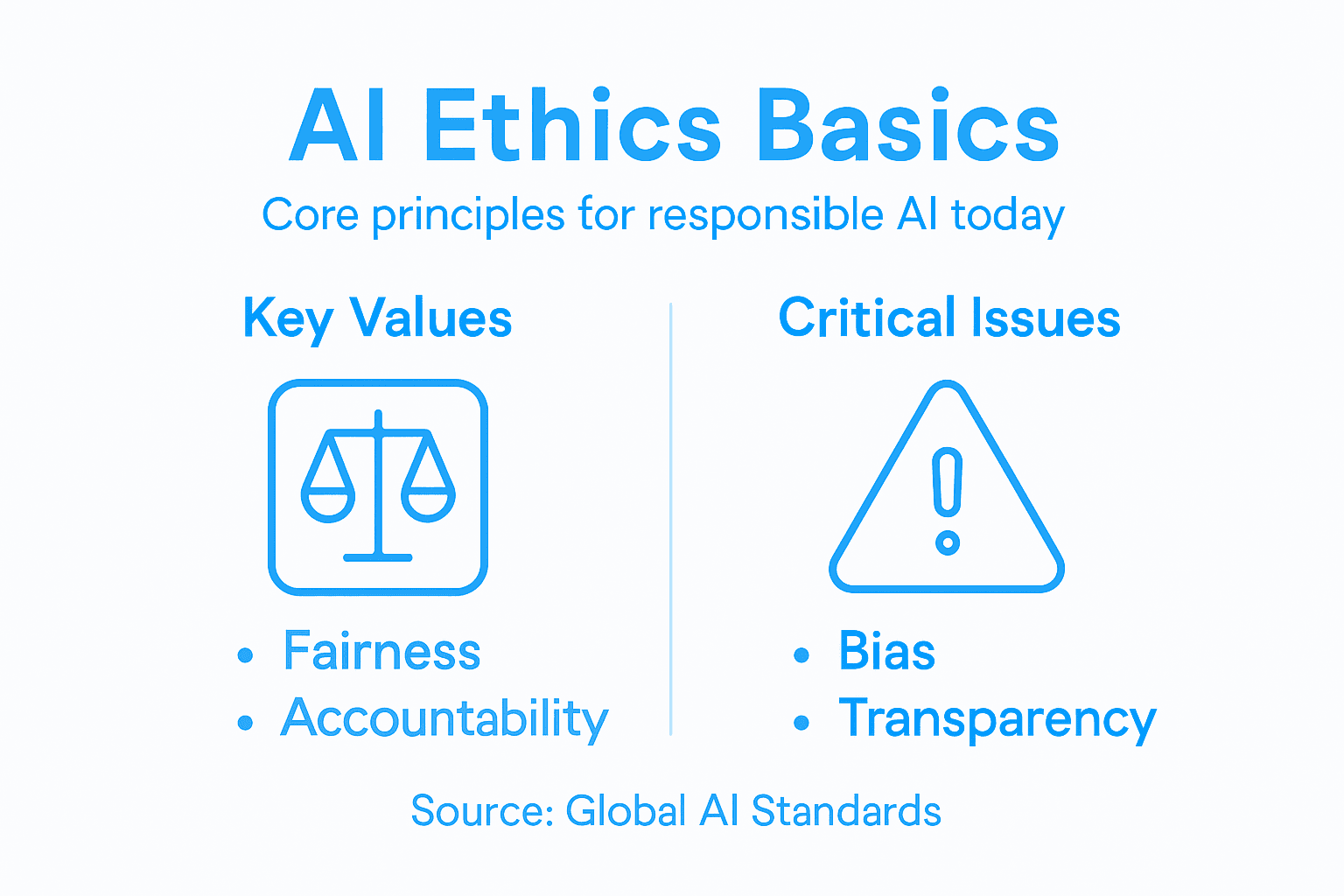
Your data science team can’t remove bias they don’t measure. Historical hiring data reflects past discrimination. Criminal justice datasets overrepresent certain demographics. Medical research trained on predominantly wealthy, Western populations fails for other populations.
This creates a real dilemma: datasets that are comprehensive enough to train powerful models often contain the exact biases your ethics framework prohibits.
The Transparency Trap
Machine learning systems work through mathematical abstraction that humans cannot easily interpret. Opacity in AI decision-making creates accountability gaps. You can’t explain why a system denied a loan application or flagged a person for additional scrutiny.
Your compliance team needs explanations. Your users demand them. Your algorithms can’t always provide them without sacrificing accuracy or introducing false narratives.
Common challenges include:
- Deep learning models that optimize for accuracy but sacrifice interpretability
- Systems trained on proprietary data your organization can’t audit or validate
- Real-time decisions made too quickly to conduct meaningful human review
- Emergent behaviors that didn’t appear during testing but emerge in production
- Competing priorities between fairness and performance metrics
The Knowledge Gap
Your data scientists may not understand ethics frameworks. Your ethics team may not understand machine learning constraints. Lack of ethical knowledge among developers means teams deploy systems without understanding their ethical implications.
Training helps. But it takes time. Your organization might ship systems before your teams fully internalize ethical requirements.
The Scale Problem
Ethical considerations don’t scale linearly. A system serving one jurisdiction faces different challenges than one serving twenty. Fairness definitions that work in one context fail in another. What counts as “transparency” varies dramatically across cultures.
Your governance structure must handle this complexity without requiring separate governance processes for each deployment context.
The biggest challenge isn’t understanding ethics. It’s building systems that enforce ethics at scale.
Your audit trails must track ethical decisions. Your testing protocols must measure fairness across populations. Your deployment checkpoints must verify compliance before systems reach users. This infrastructure doesn’t exist by default.
Compare the core implementation challenges organizations face in operationalizing AI ethics:
| Challenge Area | Practical Obstacle | Example Impact on Operations |
|---|---|---|
| Training Data | Hidden historical bias | Disadvantaged groups in outcomes |
| Transparency | Model complexity reduces explainability | Hard to justify automated decisions |
| Knowledge Gap | Limited team expertise in ethics or ML | Misaligned priorities during deployment |
| Scale | Governance difficulty across jurisdictions | Inconsistent application of principles |
Pro tip: Start with your highest-risk systems—those making consequential decisions about individuals—and build ethical testing and audit infrastructure there before expanding to lower-risk deployments.
Ensuring Compliance and Accountability
Compliance isn’t a one-time audit checkbox. It’s a continuous operational requirement embedded into how your organization builds, tests, deploys, and monitors AI systems. Without accountability structures, your ethical principles remain aspirational.
Your governance teams must create measurable compliance mechanisms that your organization can actually enforce across systems and jurisdictions.
Building Accountability Into Operations
Incorporating human judgment at decision points means establishing explicit oversight mechanisms where humans validate, override, or audit AI decisions. This isn’t bureaucracy. It’s risk management.
For high-stakes systems, human review must occur before decisions affect individuals. Your governance structure should specify which system types require human approval, what review criteria apply, and how quickly humans must act.
Your accountability framework needs:
- Clear ownership of AI system versions and outcomes
- Testing protocols that verify ethical requirements before deployment
- Documentation requirements that create audit trails
- Periodic audits to catch performance drift or emerging bias
- Escalation processes when systems deviate from ethical standards
- Authority to halt or modify systems that create unacceptable risk
Creating Measurement Infrastructure
Developing tools and indicators to assess policy effectiveness means creating metrics your organization can actually track. Fairness metrics vary by context. Transparency means different things in different industries.
Your governance teams must define fairness metrics specific to each system. For hiring systems, measure candidate selection rates across demographic groups. For credit systems, measure approval rates and default rates separately. For content moderation, measure false positive and false negative rates by content category.
Without measurement, you’re guessing whether your systems meet ethical standards.
Documentation and Transparency Requirements
Documentation creates accountability. When decisions are recorded, systems that create problems become visible. Your governance framework should require:
- Impact assessments completed before deployment
- Test results showing fairness metrics across populations
- Records of human review decisions and reasoning
- Change logs tracking system modifications
- Incident reports when systems produce unexpected outcomes
- Annual audits comparing actual performance to documented expectations
Transparency doesn’t mean publishing proprietary algorithms. It means stakeholders understand how systems affect them and how your organization ensures fairness.
Multi-Stakeholder Governance
Legal and institutional measures enforce compliance through involvement from multiple stakeholders. Your data science team can’t police itself. Your legal team can’t understand technical constraints they don’t study. Your users aren’t involved in internal decisions affecting them.
Effective governance includes representation from:
- Data science and engineering teams
- Compliance and legal expertise
- Ethics specialists or external advisors
- Affected communities or their representatives
- Business leadership with decision authority
Accountability requires institutional structure, not just good intentions or external audits.
Your governance meetings should include representatives from these areas. Decisions should require sign-off from multiple functions. When compliance and business priorities conflict, that tension surfaces explicitly rather than getting resolved quietly in favor of speed.
Pro tip: Create a quarterly compliance dashboard showing fairness metrics, audit findings, and incident reports by system—this makes ethical performance visible to leadership and creates consequences for drift.
Navigate the Complexities of AI Ethics with Confidence
Understanding AI ethics is essential for responsible innovation. The challenges of algorithmic bias, transparency, accountability, and cross-jurisdictional compliance can feel overwhelming. Organizations need clear guidance to turn principles into practical actions that protect both users and business reputations.
At AICloudIT, we provide IT professionals and business leaders with the latest insights and tools to address these exact challenges. Explore our AI news and expert analyses to stay informed on ethical AI development, regulatory updates, and practical frameworks that enforce fairness and accountability. Do not wait until compliance gaps become risks. Visit AICloudIT today to empower your governance strategies and build trustworthy AI systems that meet global standards.
Frequently Asked Questions
What is AI ethics?
AI ethics refers to the operational framework that guides the responsible development and deployment of artificial intelligence systems, ensuring that they align with human rights, fairness, transparency, and accountability.
Why is AI ethics important for organizations?
AI ethics is crucial for organizations as it helps protect their liability, reputation, and operational legitimacy by addressing issues like algorithmic bias, transparency in decision-making, and ensuring human oversight.
What are some common misconceptions about AI ethics?
Common misconceptions include the belief that AI systems are neutral, that fairness means equal treatment for everyone, and that transparency alone can resolve ethical issues without proper accountability mechanisms.
How can organizations implement AI ethics effectively?
Organizations can implement AI ethics by documenting specific definitions of fairness and transparency, embedding ethical considerations into governance structures, and creating measurable compliance mechanisms throughout the lifecycle of their AI systems.
Recommended
- What Is Ethical AI? Importance & Principles Explained – AICloudIT
- Google DeepMind’s AGI Safety Blueprint: A 2030 Forecast Amid Rising Skepticism – AICloudIT
- 30 Best AI Movies of All Time: Must-Watch List for Sci-Fi Fans – AICloudIT
- AGI Archives – AICloudIT
- Academic Integrity and AI – Navigating Ethical Challenges
