
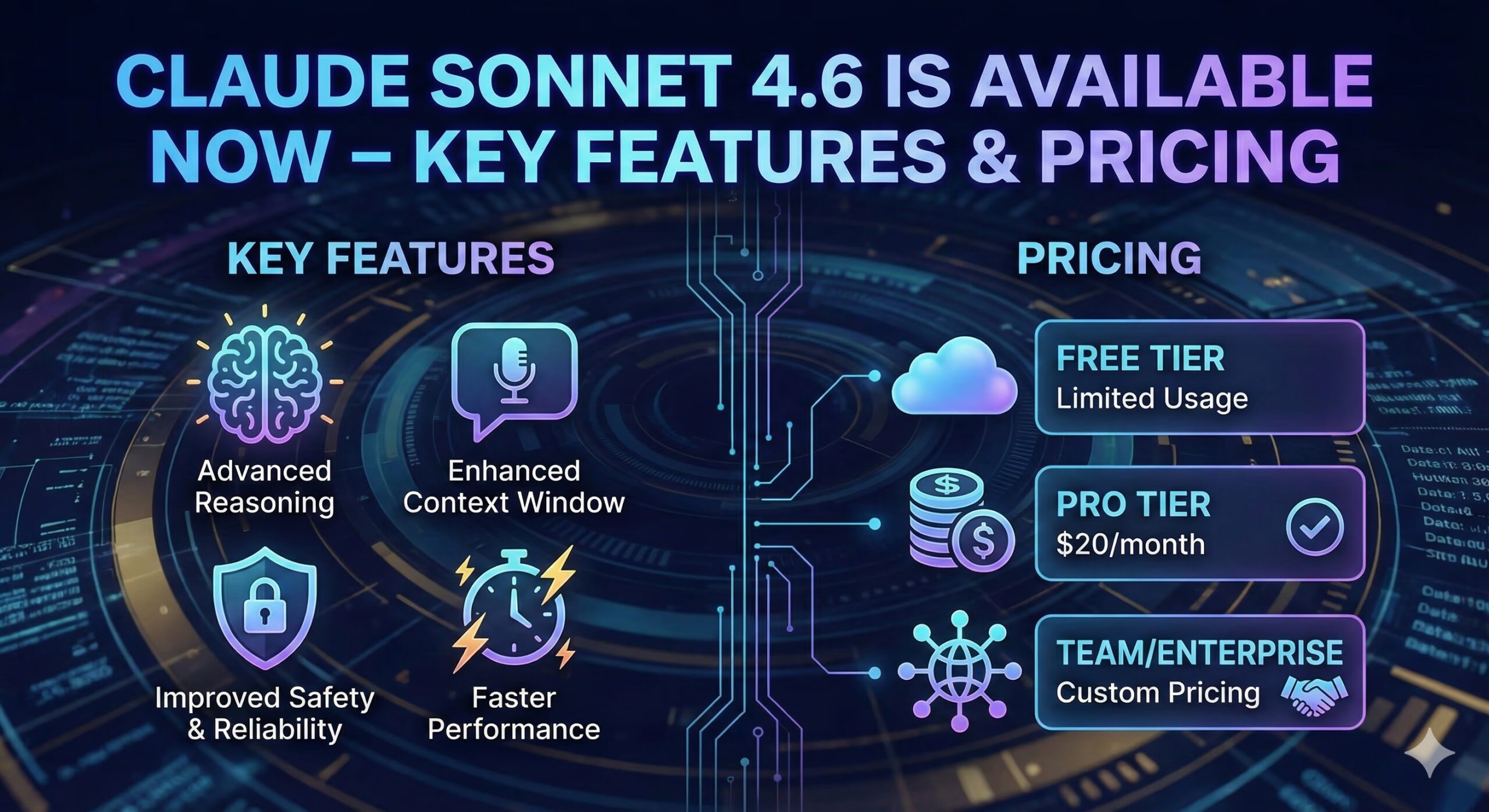
Twelve days. That’s how long it took Anthropic to follow up its flagship Opus 4.6 release with another major model drop. On February 17, 2026, Anthropic launched Claude Sonnet 4.6, and the headline is genuinely impressive: it hits 79.6% on SWE-bench and 72.5% on OSWorld at a price point five times cheaper than Opus 4.6. If you’re a developer still paying Opus prices for routine tasks, this is the moment to reconsider that decision.
Users who tested early builds preferred Sonnet 4.6 over its predecessor around 70% of the time, and many even preferred it to the previous generation’s smartest model, Claude Opus 4.5. Anthropic is clearly moving at a breakneck pace, and Sonnet 4.6 is the clearest sign yet that frontier-level AI performance is rapidly becoming accessible to everyone, not just enterprise customers with deep pockets.
What Is Claude Sonnet 4.6?
Claude Sonnet 4.6 is Anthropic’s mid-tier flagship model in the Claude 4 family, sitting between the lightweight Haiku and the heavy-duty Opus 4.6. Historically, “Sonnet” meant the everyday workhorse: faster, cheaper, and good enough for most tasks. With version 4.6, Anthropic is pushing that definition hard.
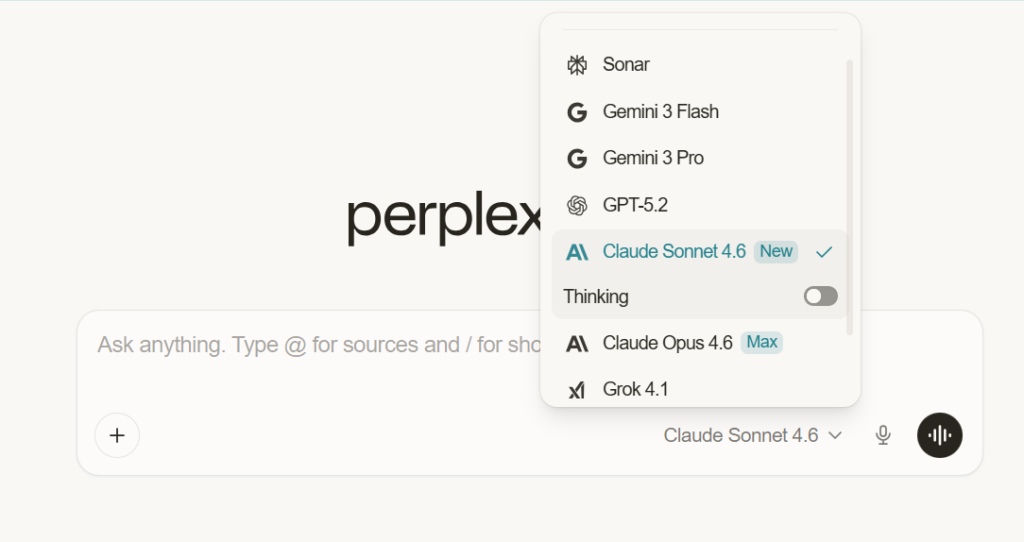
This is a full upgrade across coding, computer use, long-context reasoning, agent planning, knowledge work, and design. It’s now the default model for both Free and Pro plan users on claude.ai and Claude Cowork, replacing Sonnet 4.5. In other words, if you use Claude casually without digging into settings, you’re already running on it.
How Sonnet 4.6 Builds on Its Predecessors?
Previous Sonnet models were capable but had noticeable rough edges: overengineered code suggestions, inconsistent instruction-following, and context comprehension that would sometimes miss obvious project conventions. Sonnet 4.6 directly targets those frustrations.
The key improvements over Sonnet 4.5 are:
- Better context comprehension before modifying code, catching project conventions and avoiding redundant patterns
- Stronger instruction following without wandering off-script mid-task
- Major computer use improvement, far beyond what previous Sonnet models could do [llm-stats]
- Math benchmark jump from 62% to 89%, a dramatic leap for data and quantitative work [nxcode]
Key Capabilities and Performance
Numbers are nice, but what does Sonnet 4.6 actually do better?
Coding and Developer Productivity
This is where Sonnet 4.6 earns its reputation. It scores 79.6% on SWE-bench Verified, barely trailing Opus 4.6 at 80.9%, which is a remarkable result for a model at this price point. In practice, Anthropic says developers with early access preferred Sonnet 4.6 over Sonnet 4.5 by a wide margin, and many preferred it even over Claude Opus 4.5 from November 2025.
In long development sessions, the model reads existing code more carefully before making changes. It consolidates shared logic instead of duplicating it, reduces overengineering, and produces edits that fit the surrounding codebase more naturally. That might sound like a small thing, but anyone who has cleaned up after an AI that ignored existing code patterns knows how much time that saves.
Computer Use and Automation
Sonnet 4.6 scores 72.5% on OSWorld, marking a major improvement in computer use skills compared to prior Sonnet models. This means the model is genuinely better at operating software, navigating interfaces, and executing multi-step automation tasks. For teams building AI agents that need to interact with real applications, this is a meaningful upgrade.
Long-Context Reasoning
Sonnet 4.6 is the first Sonnet-class model with a 1 million token context window (in beta), matching the context capacity of Opus 4.6. Combined with context compaction technology that prevents context rot during long sessions, this means the model can handle entire codebases, lengthy research documents, and massive datasets without losing the thread.
Knowledge Work and Design
Beyond code, Sonnet 4.6 handles document analysis, report summarization, spreadsheet navigation, and design workflow assistance better than its predecessor. Anthropic positions this as a “full upgrade” for knowledge workers who need AI to tackle serious information loads without breaking down.[Source: croma]
Pricing and Availability
Here’s the part that makes Sonnet 4.6 genuinely exciting for budget-conscious developers and teams.
Pricing is unchanged from Sonnet 4.5:
- Standard context (up to 200K tokens): $3 input / $15 output per million tokensanthropic+1
- Pro plan: $20/month
- Max plan: $100/month
That’s five times cheaper than Opus 4.6, while delivering 98% of Opus performance on most coding tasks. If you’re currently running Sonnet 4.5 and managing costs, upgrading is, as one analyst put it, “pure upside at the same price”.
Where Sonnet 4.6 is available right now:
- claude.ai (Free and Pro, as the default model)
- Claude Cowork (default model)
- Claude Code
- Anthropic API (model ID: claude-sonnet-4-6)
- GitHub Copilot (generally available)[github]
- AWS Bedrock
- Google Cloud Vertex AI
Free Tier Upgrades Included
Anthropic also used this launch to upgrade the free tier significantly. Free plan users now get file creation, connectors, skills, and context compaction, features that were previously reserved for Pro subscribers. This is a notable shift and signals Anthropic trying to convert more free users into paid customers by giving them a real taste of the product’s capabilities.
Claude Sonnet 4.6 vs Claude Opus 4.6
The obvious question: should you pay for Opus when Sonnet 4.6 is this capable? Here’s an honest breakdown.
| Criteria | Claude Sonnet 4.6 | Claude Opus 4.6 |
| SWE-bench (coding) | 79.6% | 80.9% |
| Computer use (OSWorld) | 72.5% | Higher digital |
| Math benchmarks | 89% | Elite |
| Context window | 1M tokens (beta) | 1M tokens |
| Reasoning depth | Strong | Deeper for complex chains |
| Speed | Faster | Slower |
| Pricing | $3/$15 per 1M tokens | ~5x more expensive |
| Best for | Production workhorse | Complex multi-step specialist |
The verdict from independent analysis: Sonnet 4.6 is the winner for most coding tasks, computer use, automation, and instruction following. Opus 4.6 is worth the premium only for tasks requiring deep multi-step reasoning, complex architecture decisions, or elite abstract problem-solving.
One practical tip from the community: run Sonnet 4.6 in parallel with your existing Opus setup for a week, then compare on your actual workflows. Most teams will find Sonnet 4.6 handles 80 to 90% of their Opus workloads just fine.
What This Means for the AI Market?
Releasing two major models in under two weeks is not an accident. Anthropic is responding to relentless pressure from OpenAI, which dropped GPT-5.3 Codex just days before Opus 4.6. The Claude family is moving fast, and Sonnet 4.6’s pricing strategy sends a clear message: frontier AI performance should not require a frontier price tag.
GitHub Copilot’s same-day integration of Sonnet 4.6 also signals how quickly the broader developer ecosystem is moving to adopt new models. The gap between “cutting-edge research model” and “default tool in your IDE” is now measured in hours, not months.
Other Recent News:
Google’s Big AI Upgrade for Chrome: Gemini Takes Over Browsing
OpenAI Prism: AI Workspace for Medical & Scientific Research
The Grok AI Undressing Scandal: How One Chatbot Sparked Global Safety Laws
Why Indian IT Stocks Fell After Anthropic’s New Claude “Cowork” Legal AI Tools?
FAQs
Is Claude Sonnet 4.6 free?
Yes, Sonnet 4.6 is the default model for Claude Free plan users. The free tier now includes file creation, connectors, skills, and context compaction.
What’s the difference between Sonnet 4.6 and Opus 4.6?
Opus 4.6 is deeper and more powerful for complex reasoning. Sonnet 4.6 delivers near-identical performance on most tasks at five times lower cost, making it the better choice for everyday use.
How do I access Claude Sonnet 4.6 via the API?
Use the model ID claude-sonnet-4-6 through the Anthropic API. Pricing is $3 input / $15 output per million tokens.
Is Sonnet 4.6 available on GitHub Copilot?
Yes, Claude Sonnet 4.6 is now generally available in GitHub Copilot as of February 17, 2026.
What are Sonnet 4.6’s benchmark scores?
79.6% on SWE-bench Verified (coding), 72.5% on OSWorld (computer use), and 89% on math benchmarks.
Should I upgrade from Sonnet 4.5 to Sonnet 4.6?
Absolutely, and at no extra cost. Pricing is identical, but performance is significantly better across coding, reasoning, and computer use.
Disclaimer: Feature details, pricing, and availability are based on Anthropic’s official announcements as of February 2026 and may change. Verify current information through Anthropic’s official channels before making purchasing decisions.
