

Wild Moose
AI first responder for automated root cause analysis in production incidents
Tool Information
What Is Wild Moose?
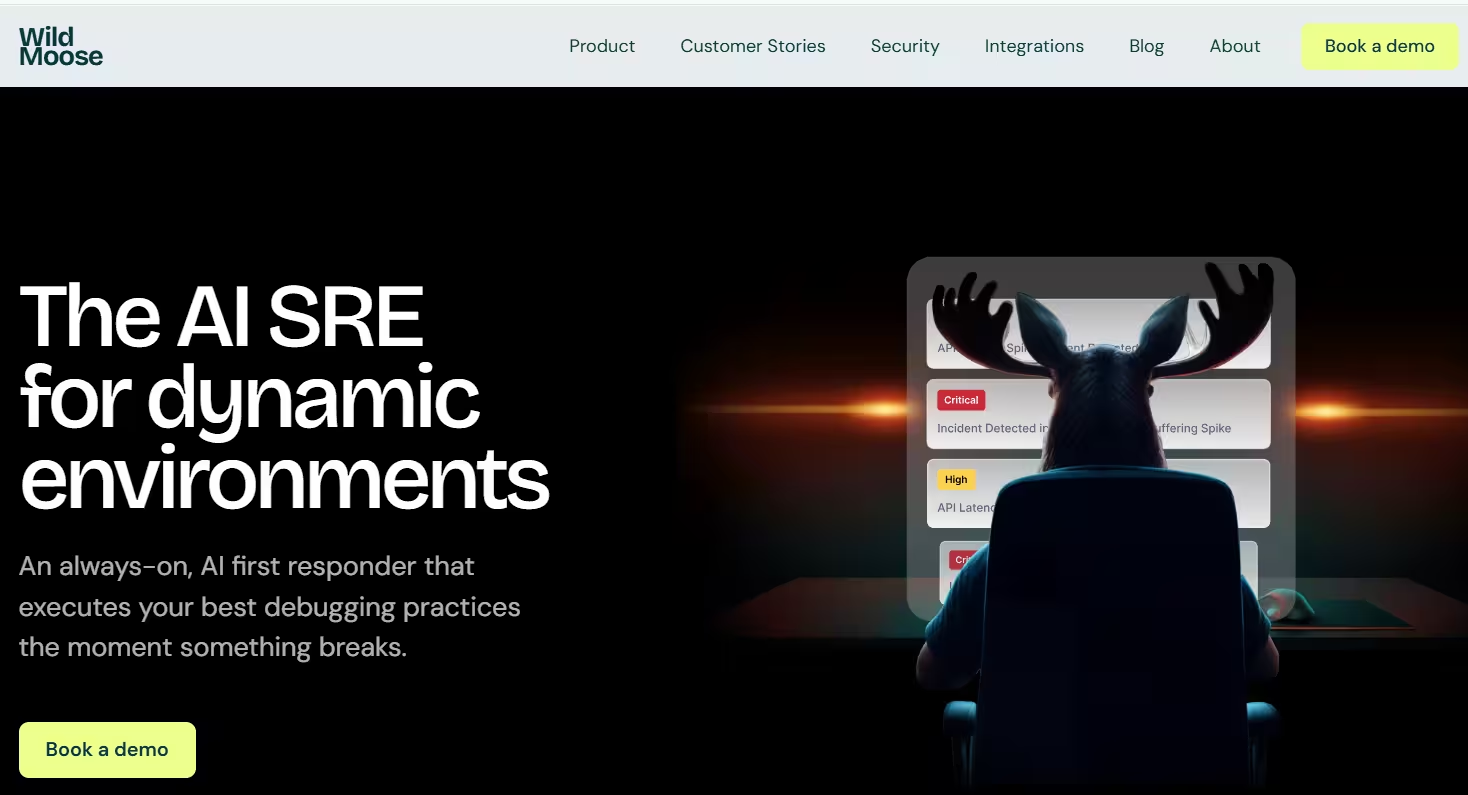
Wild Moose is an AI SRE platform built for dynamic environments, acting as an always-on first responder that executes debugging practices the moment something breaks. Triggered automatically by alerts, it kicks off root cause investigations without waiting for a human to start digging through logs.
The platform codifies tribal knowledge to gather context across fragmented observability tools, delivering evidence-backed root causes and recommended next steps in real time. It is designed for environments too complex for generic black-box AI, using specialized AI micro-agents that investigate alerts and surface root causes in under a minute.
Who Is the Owner of Wild Moose?
Wild Moose is developed and operated by Wild Moose, an independent AI-powered SRE company. The company emerged from stealth in October 2025 with a 7 million USD seed round to redefine site reliability engineering with AI.
Who Is the Founder of Wild Moose?
The reviewed public sources do not name specific individual founders for Wild Moose. The company is listed in the Y Combinator directory and is presented under its own corporate brand rather than a named public founder profile.
When Was Wild Moose Launched?
Wild Moose had an initial release around January 2023, based on directory records. It went through Y Combinator, launched publicly in March 2026, and later emerged from stealth mode in October 2025 with seed funding to expand its platform.
Where Is the Company Located?
A specific headquarters address is not disclosed in the official sources reviewed. The company can be reached through support@wildmoose.ai for onboarding and setup.
Key Features of Wild Moose
- Automated alert-triggered investigation: Wild Moose automatically kicks off a root-cause investigation the moment an alert fires.
- Evidence-backed root cause reports: It gathers and analyzes logs, metrics and code to produce explainable, evidence-backed summaries.
- System of expert agents: Wild Moose orchestrates coordinated debugging agents customized to a company's environment, running investigations in parallel.
- Continuous learning: The platform learns a company's infrastructure, investigation patterns and edge cases over time to speed up future incidents.
- Feedback-driven improvement: Users can indicate what information was useful, helping the underlying model improve with each incident.
- Broad tool integration: Wild Moose connects with observability, deployment, cloud and knowledge-base tools such as Datadog, New Relic, Snowflake and Cloudflare.
- Slack and Microsoft Teams integration: Investigation results appear as threaded replies directly in alert channels within seconds.
- Moose Builder: An onboarding tool guides teams through creating their first debugging agents without needing deep system knowledge upfront.
- No agent installation required: The platform integrates via APIs within minutes, without ongoing agent maintenance.
- Conversational AI interface: Developers can chat with the AI, trained on their specific environment, to get direct answers about system issues.
- Data security controls: Customer data is not retained outside the user's network, with end-to-end encryption and an on-premise deployment option available.
- Handles unstructured data: Wild Moose can work with logs and data without requiring prior preparation or structuring.
- Incident status and summaries in Slack: Teams get incident kickoff notices, status updates and summaries directly inside Slack.
Best Use Cases of Wild Moose
Wild Moose is best for engineering and on-call teams that need to cut Mean Time to Identify and Mean Time to Recovery during production incidents. It is especially useful for companies with 25 or more developers that already use observability platforms like Datadog, Sentry or Elastic and want AI to handle the first steps of investigation automatically.
It also fits organizations dealing with complex, fragmented monitoring setups where tribal knowledge about debugging patterns is hard to scale across a growing team. Because it integrates with Slack and Teams, it is well suited for teams that want incident findings delivered directly into their existing communication workflows.
F.A.Q (13)
Pros and Cons
Pros
- Automated Investigation On Alert
- Evidence-Backed Root Cause Reports
- Learns Company-Specific Infrastructure
- Integrates With Major Observability Tools
- No Agent Installation Required
- End-To-End Encryption
- On-Premise Deployment Option
- Reduces MTTR Significantly
- Slack And Teams Integration
Cons
- Enterprise Sales Only
- No Public Self-Serve Pricing
- Best Suited For Teams With 25 Plus Developers
- Requires Logs Or Metrics In A Supported SaaS Platform
- Onboarding Setup Needed Before Full Automation
Reviews
You must be logged in to submit a review.
No reviews yet. Be the first to review!

Similar Tools

AI tool for generating, editing and enhancing UGC and talking videos
2026-07-19
Free + from $3.99/mo

AI photo generator that turns a selfie into stylized portraits and avatars
2026-07-13
from $9.9
AI first responder for automated root cause analysis in production incidents
2026-07-19
Free